A Travelogue
Lokkhi Purnima expressed her exuberance on having me as her ride, by serenading loudly. She seemed to burst with energy and pride and overtook all her compatriots to show me her jungle mates.
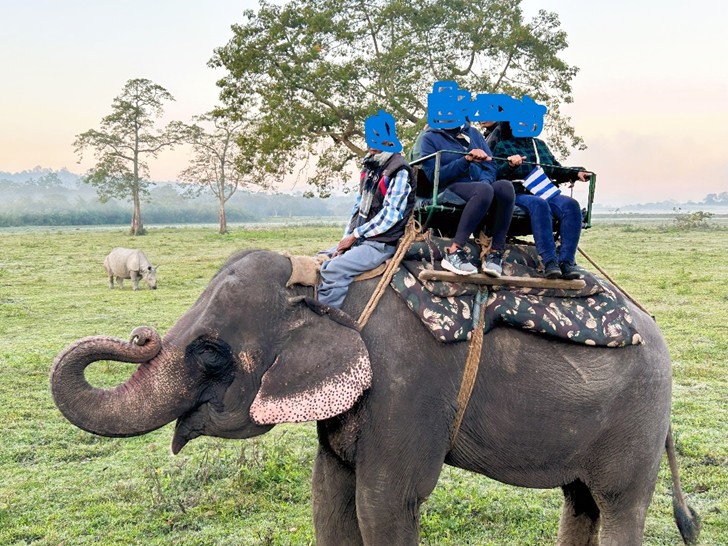
Lokkhi knew how to pose!
Day 1
Some 6 days back, I had landed in Guwahati and had boarded an Innova along with other travel mates to go towards Shillong, our first stop. The weather was pleasant, cool November days, best time for outdoors.
On our way we stopped at the massive Umiam Lake, a large reservoir, with a dam at one end. The purpose was to generate hydroelectric power. Now the site serves as a tourist spot for water sports too as well as means for irrigation, fisheries, and drinking water. The gentle breeze, around the lake, surrounded by large, tall trees of pine and figs, with the water twinkling in the sun, reminded me of the views of Lake Brienz and Thun in Switzerland. Well, we have a spot in our country which is just like an international tourist spot!

Umiam Lake
I was already marvelling at the abundance of nature’s presence as we were winding our way. I only hoped for more, and man, was my wish granted?
Being Far East, the sun was already setting in the horizons at around 4 pm, when we reached Shillong. We were put up at Tripura Castle. This was built by Maharaja Bir Bikram Manikya, as a summer retreat, in the 1930s, enamoured by the splendour of Shillong,
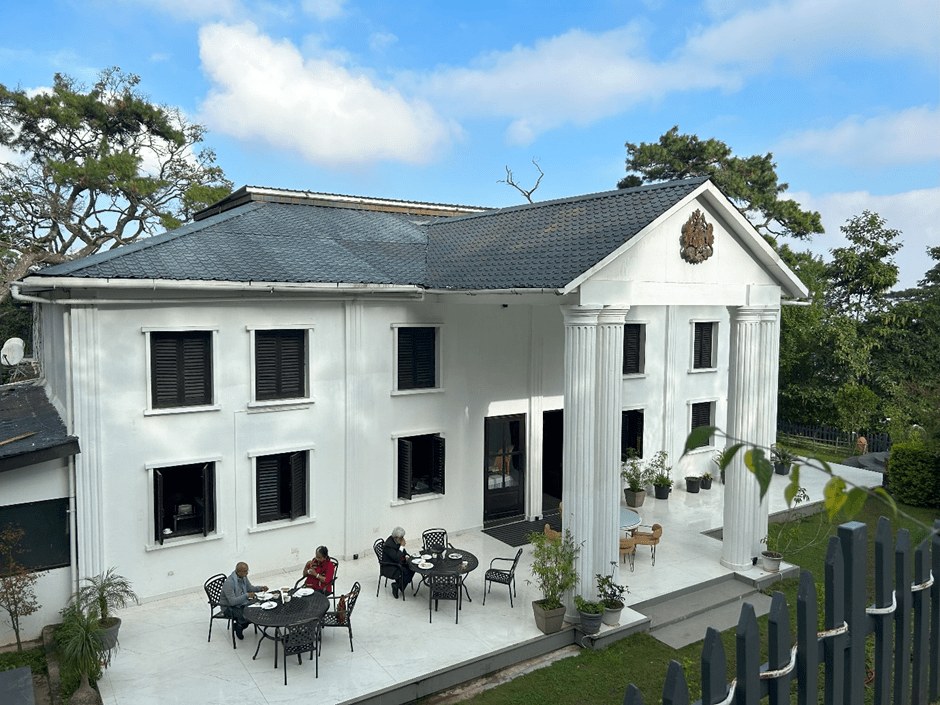
Tripura Castle Heritage Hotel
I was awestruck at this luscious greenery, diversity of flora, the happy chirping of birds all around. All this seemed to be part of a different universe all together.
We were greeted with turmeric tea, which I had never had before, and felt energized. I was soon numbed by the cold. That was surprising, as I was used to this temperature and even lower.
Ah! But this is the cold from the pure unadulterated, unfiltered nature. I am used to cold in the city which comes through several layers of smog and several layers of brick walls. The wooden walls, high ceilings, breeze coming from the hills which we were surrounded by, through the large windows, made the place chilly, but not the least unwelcome. The lawns below glittered and there was a warm bonfire going on.
Being a quaint, small town, there was not much to do in the evening. Instead of blaring traffic, I heard few chirps occasionally and lots of crickets and saw a few fireflies. Standing by the window, I could see the city gleaming across several hillocks, but very peaceful and quiet.
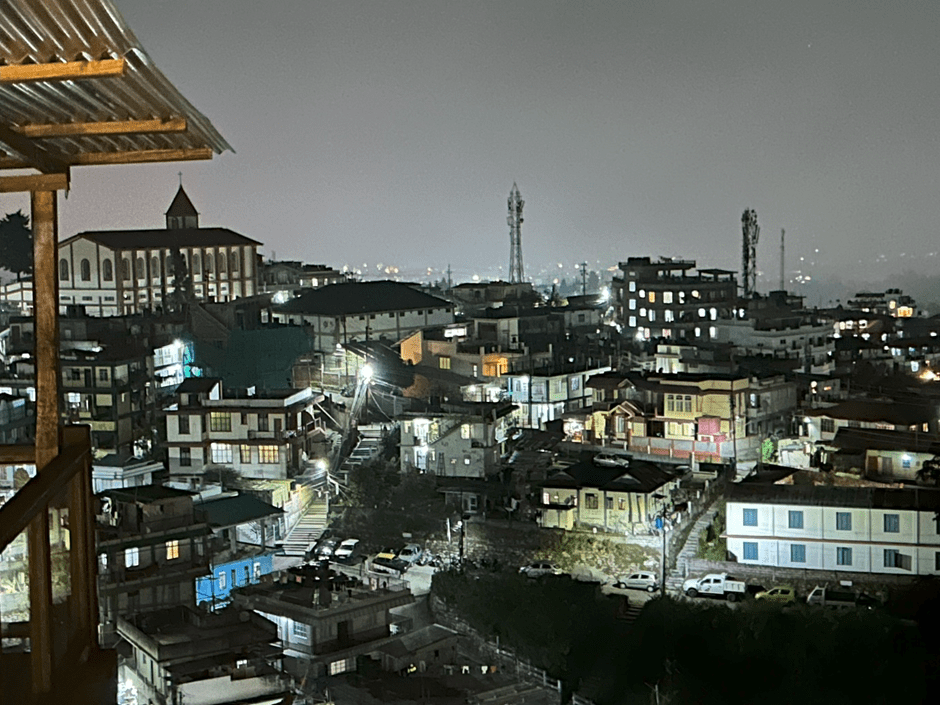
Shillong view at night
We had an Indian dinner, very sumptuous, and retired early.
Day 2
While the evening view of the hotel had impressed me already, the morning had something more in store.
To me it seemed that each wing of this heritage hotel was on top a hillock, and we had to pass through lush green lawns, with large pine and fir trees at the edges, and beautiful, well maintained gardens, to have our food or when we were venturing out. There were battery operated go karts which we used sometimes.
I was fascinated by all the trees and plants around, all decked in dewdrops, seemed to sway and sing along with the melodies emanated by the birds. The lawn was moist with the precipitations and was a pleasure to walk on. The sky was azure in the centre, with few fleeting white clouds, and sapphire in the horizon. I could identify some of the trees—fir and pine and bamboo shoots. But most escaped my identification.
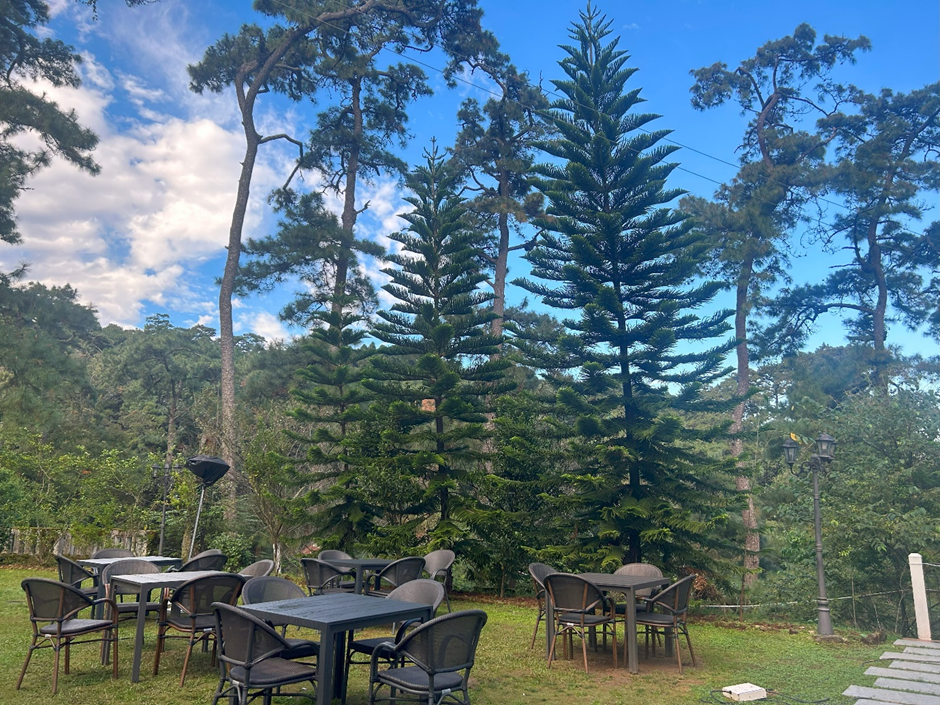
View from Tripura Castle
Post breakfast, we started off for sightseeing. While crossing the small city of Shillong, we could see many children, smartly dressed and walking towards their school. Soon the city limits were over and we were heading towards Bangladesh border.
As we left the city, we started crossing many of the hills and mountains, and saw few waterfalls off and on, and few indications of them, dried up as they are all rainfed. We were in the East Khasi hill region. The variety and diversity of the plants and trees still bewildered me. I saw some tall slim plants, which I mistook for coconut, but was corrected by the driver that those are areca nut plants.
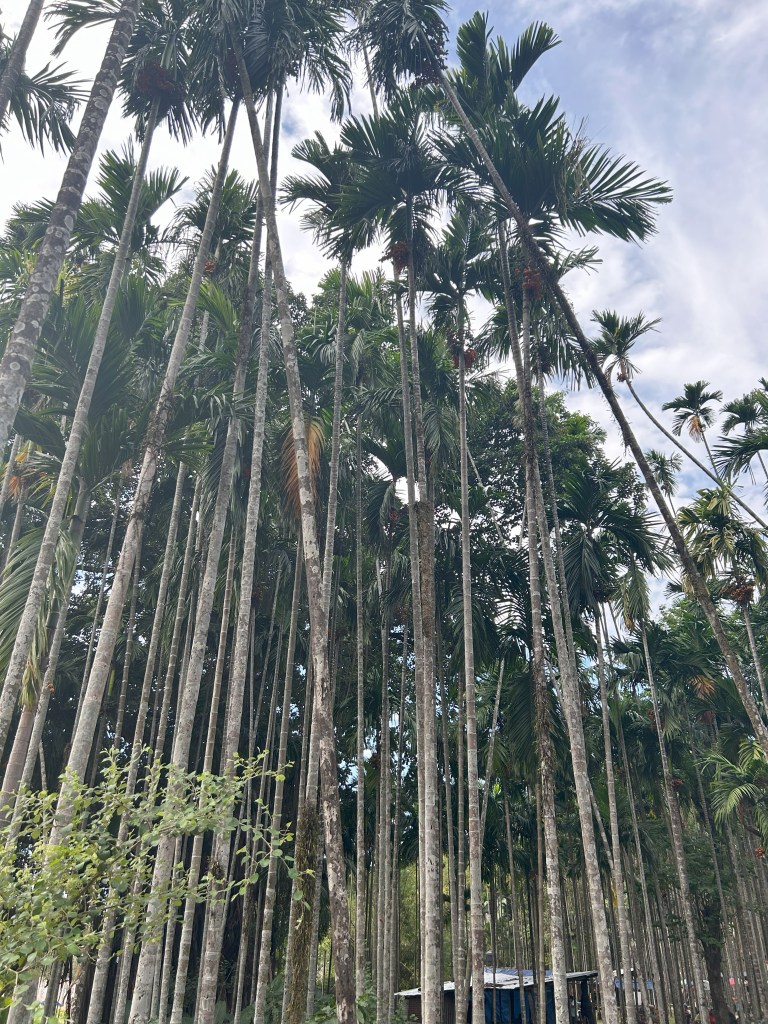
Areca/Betel nut plants
There were so many different ferns, which I had not seen in the other hills I have visited and certainly not the outgrowths of bamboos, which seemed to tower over, standing out here and there. The sky would sometimes get laden with white clouds, and sometimes it would be bright. The fragrance was that of moist earth and many unknown varieties of flowers and leaves.
The good roads became bad and we could also see exploitations by our species, many of the mountains were getting ripped up and stones, coal, etc. were being collected to be shipped out. We saw evidence of some barren mountains, which had been stripped earlier.
The border roads were so bad that it took more than three hours, with a small break in between, to reach Dawki River, also referred as Umngot River.
The Dawki is in the West Jaintia hill region; this is the only time we leave the Khasi hills. The significance of Dawki River is that the water is crystal clear and that you can see the bottom of the river. While on a boat, you can catch a very clear reflection of the boat and the passengers, as in a mirror. Mostly it is true, but do not go by the photos in Google, they are photoshopped.
We did a 45 minutes single paddle boat ride. Wherever the water was less than 10 feet deep or so, we could see the rocky bottom but in the deeper parts we couldn’t. We went up to an area with several streams rushing into the river. The water was dark green, a reflection of the heavy foliage which it is surrounded by. We went below the rickety old, suspension bridge built in 1932, which we had crossed while reaching this place. We spotted few tribal women, perched on rocks and crevices, in the quieter parts, with their fishing hooks.
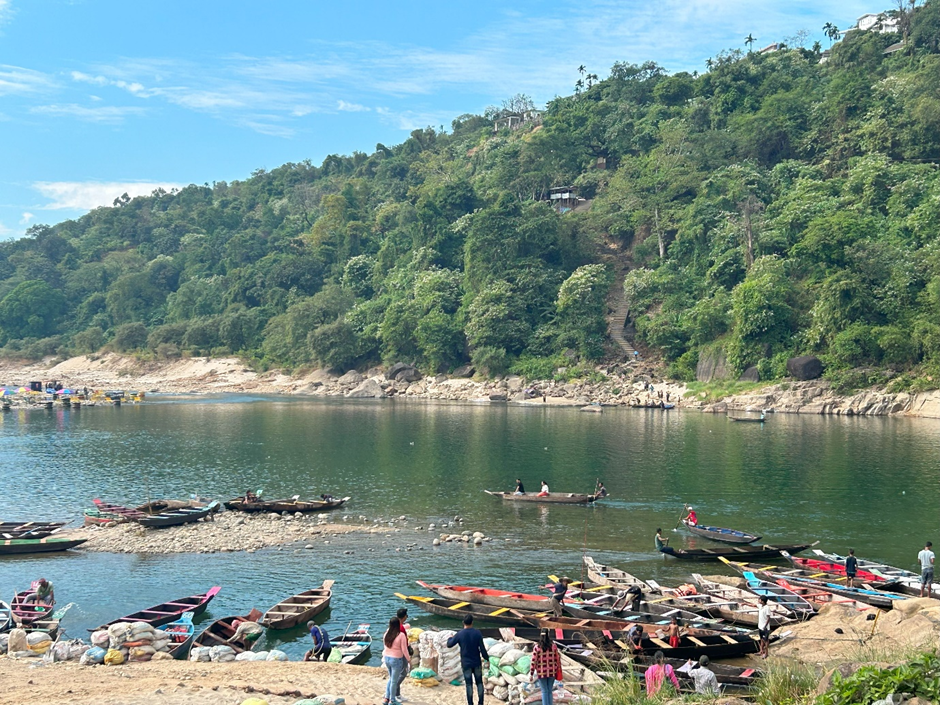
Dawki River
At the river bank, a line of boulders divided India and Bangladesh and a BSF jawan kept the Indians on the right side of the border. Over at the Bangladesh side, there were colourful tents, few of them with mikes blaring, selling biriyani and lunch for 60 taka or so.
The visit to Dawki, although fun, had taken up a lot of time, and we had to travel through the bad, bumpy, roads (or lack of) again to reach our next stop Mawlynnong village, renowned as the Asia’s cleanest village.
It does carry that credential well, but one thing I noticed, that so were all the villages we crossed. All of them spotless, no litters, no strays, well kept garden and porch.
Mawlynnong is a small village, although I would call it a tiny city, as the houses there seemed to be prosperous, and is home to about 400 Khasi families. We had lunch at a Mom/daughter shop and walked around this quiet hamlet. Vehicles are not allowed beyond a certain point. Most of the population were Christians. And as is the tradition in most Khasi villages, the inhabitants participate in cleaning of the streets and lanes.
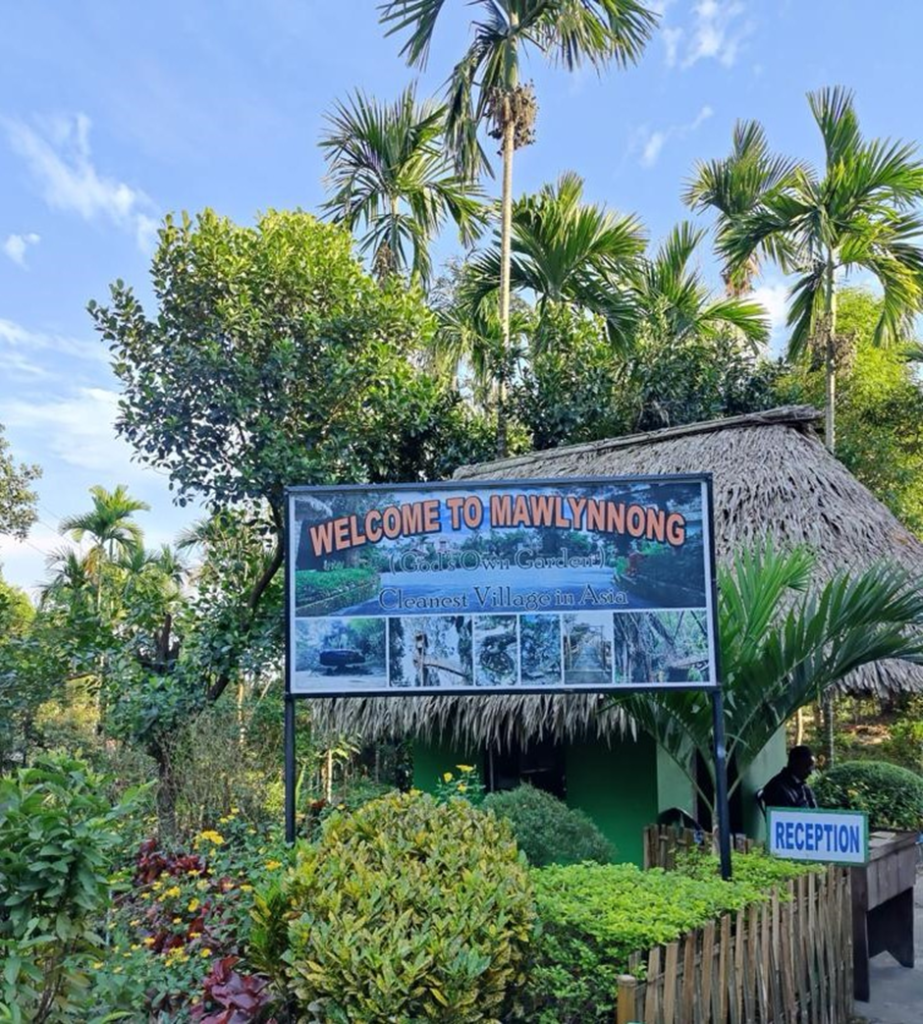
Mawlinnong VIllage
We did some local shopping from the market nearby and then headed back to our hotel. It was already getting dark and the bad roads had required a change in plans, like dropping the plan to see the single decker living root bridge, nearby. I would have liked to go there but then what could you see in the dark.
Back to our very picturesque heritage hotel for the night.
Day 3
We are checking out today. We are on our way to Cherrapunji, or Sohra. I didn’t know of this name change. All the milestones and signages had the name Sohra, while I was on the lookout for Cherrapunji, and getting worried about how much more distance there is to be covered. But was told by the driver that it is called Sohra locally. The roads today are very good, well tarred and winding up and down the hills, some one way, some two ways, and as usual the breathtaking sceneries and the fragrance all around.
On our way we had few stops.
First was in Smit Village. There was the abode of the Khasi Queen. The Khasi’s are matrilineal and matriarchal society. While a matriarch is the head of the family, the assets and properties are passed down to the youngest daughter of the family. I liked that. Khasi’s are now about 65% Christians and the rest are animist. The conversions happened over the last century with English and Scottish monks visiting these parts. You can still see some remnants of Scottish touch, in the plaid materials which are widely used and sold here.
We visited the Khasi Queen’s tiny palace made of bamboo. The uniqueness is that it doesn’t have be any nuts and screws. It is surrounded by a field where the annual Khasi festivals are held with all in their traditional dress and headgear.

Queen’s abode
We then headed towards Laitlum Canyon. I have seen valleys, but such a deep canyon was a first. And its massiveness made me feel diminutive. Suddenly, there is a deep drop of several thousand feet, true to the literal meaning of the word “Laitlum” meaning “end of hills”
Down below we could see a river winding its way and few hutments on the slopes. It was miles and miles of deep gorge. Surrounded by lush green rolling mountains, running in parallel and one after the other. The mountains close by were dark green with some brown patches, the distant ones had shades of blueish green, blending into greyish blue and finally fading into the horizon.
As we stool at the plateaued top, feeling like top of the world, we could see far, far out in the horizon, with the undulating hills and with the earth curving beyond. The air so pure, sky azure, white flecks of cloud, here and there, sun so bright, but not scorching at this time of the year, and the breeze so clear and crisp. Sometimes, a mist would gather over the valley. We would see the sun rays trickling in through the clouds and the mist. This place has still not been encroached or exploited by humans and nature retains its eternal beauty and bounty, I was thinking of just building a small hut here and living the rest of my life, if that is possible.
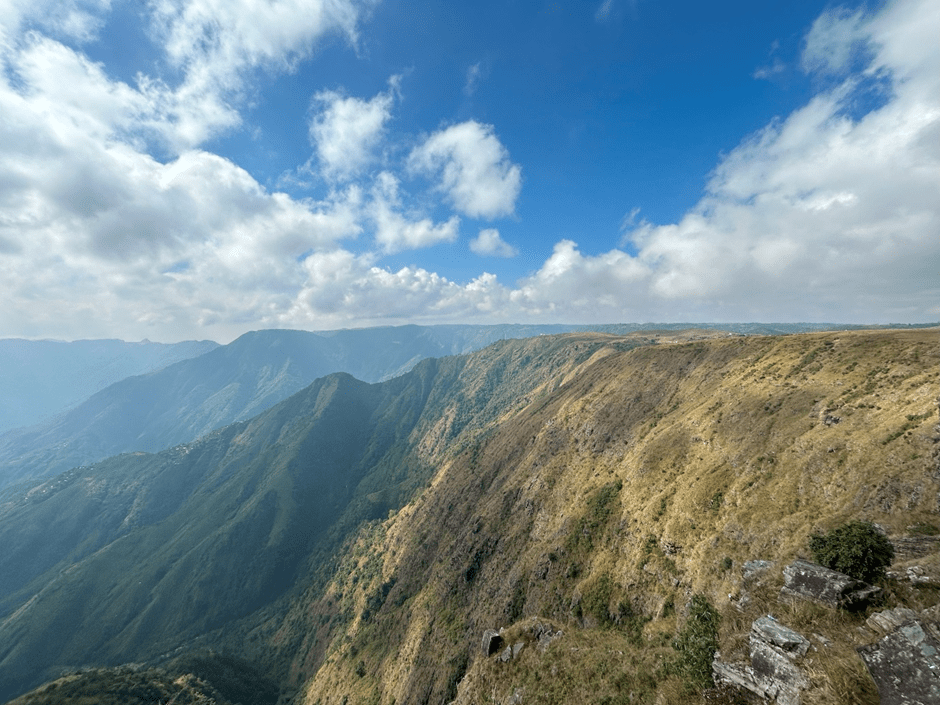
Laitlum Canyon
There were many tiny shops on the way to the view point, selling corns, pineapple, momo’s and other eatables.
We stopped at a place called Misty Hills for lunch as the next stop. Away from the hustling and bustling and the quick service world from which we came in, we found the service slow but the food delicious. The place is known for their hospitality not for quick turn arounds.
With food in our tummy, we headed towards a waterfall called NohkaLikai. As we rode up the winding roads and up the hills, we saw the clouds hanging low. Sohra was true to its name and what we had read in our school books.
As we kept going, we were now on top of a plateau, and in some places, we could see the misty clouds, sweeping low and covering the roads and fields ahead of us like a white shroud and eerily creeping up on us. It was as if we were in a dreamland moving amongst cotton candies around us.
We reached the spot for the waterfall and trudged towards the viewpoint. We caught a glimpse of the waterfall, falling down into a bright turquoise coloured pool below. But it was a fleeting moment, soon it became covered by mists, just like a shy bride hiding behind a white veil. All we had was the sound of the waterfall beneath a thick blanket of fog. There is a very sad story related to this waterfall and I will not relate it here. Wikipedia has it.

Nohkalikai Fall
The area too was surrounded by shops selling local handicrafts. Notable were the cane products, cinnamon sticks, pepper, cloves and turmeric, both raw and powder. Woollen clothes, shawls, stoles were laid out as well.
Our final stop for the day was Mawsmai Caves, a sub-terranean cave system. There are many such caves in Meghalaya, whereas this one has been made a tourist attraction. These caves were formed over time due to erosion of limestone and gushing water. There are fossils also, if really one stops to explore within the cave.
It is a 110 feet long cave with stalactites and stalagmites, winding its way, with some places so narrow, that you have to crawl on hands and feet and squeeze to pass through. I followed a burly man, assuming that if he passes through, I would too. Some places in the cave were lit up, most others dark, and some areas had water dripping. There were huge rocks and boulders jutting out, from the ceilings, the sides and from the ground and you had to watch your steps, head, and ahead. All scary and adventurous, but it was worth it.
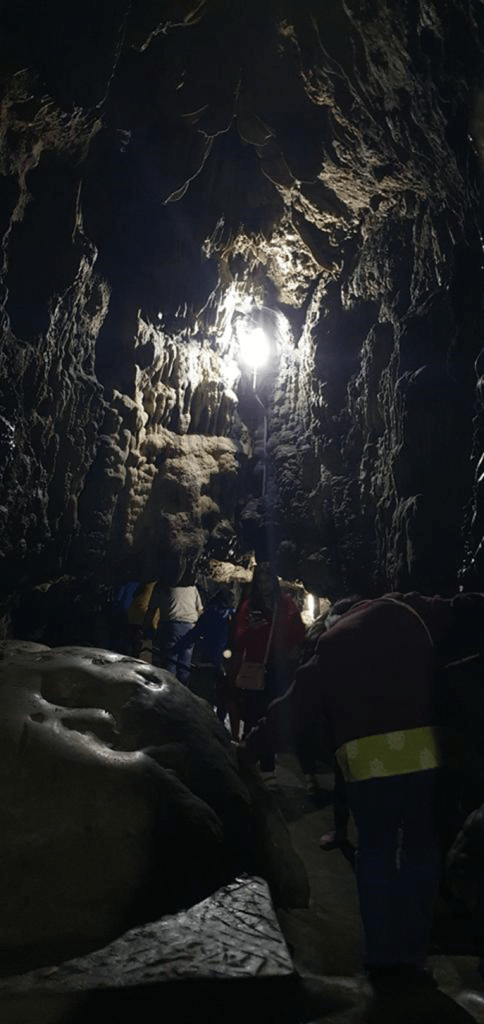
Mawsmai Cave
This area was also surrounded by tiny shops. A common theme seemed that they were all managed by women, and none would pester the tourists to buy. It is not indifference or disinterest; it is the way they are. Once you enter a shop, they treat you well and with respect and attention, but wouldn’t bother you, if you are just walking past or gazing around.
Getting dark again, so we drove towards our new stay for the next 2 days, the Jiva Resort. The resort was large, well lit, with a great ambience. We were all tired from the whole day travelling and had a quick dinner.
While walking back from dinner, I looked up, and was taken aback by the glittering sky. Took me back to my childhood days, where during power cuts in the evening and night, we would sit outside and count and name all the stars and planets and even see the milky way. I had completely forgotten about this sight, having lived in concrete cities and apartments since, where you are lucky if you see the moon. Did my best to recollect the names of the stars and constellation but I know that my memory is fading.
I fell off to sleep immediately but woke up in the middle of the night. I saw many glittering lights outside and I thought that my window might be overlooking a mountain and those are city lights. But when I woke up before day break, there were no mountains outside! Those glittering lights were twinkling stars in the sky. Oh my city-bred brain.
Day 4
I had got up early hoping to catch the sunrise at 4:45 am. I was pleased that the room gave an unobstructed view towards the east. The sky was already a medley of colours, red, crimson, lilac, magenta, blue. As if an artist is unable to make up her mind which colour to go with. I trained my camera and captured the sun rise beautifully. I have captured sun rise over sea sides and other mountains, but it never fails to captivate me. I am amazed at the canvas of colours, hours before the sunrise, spellbound as the tiny, red blob slowly raises its head, mesmerized as it comes to full circle and changes to a yellow fury, giving life and breath to every living being.
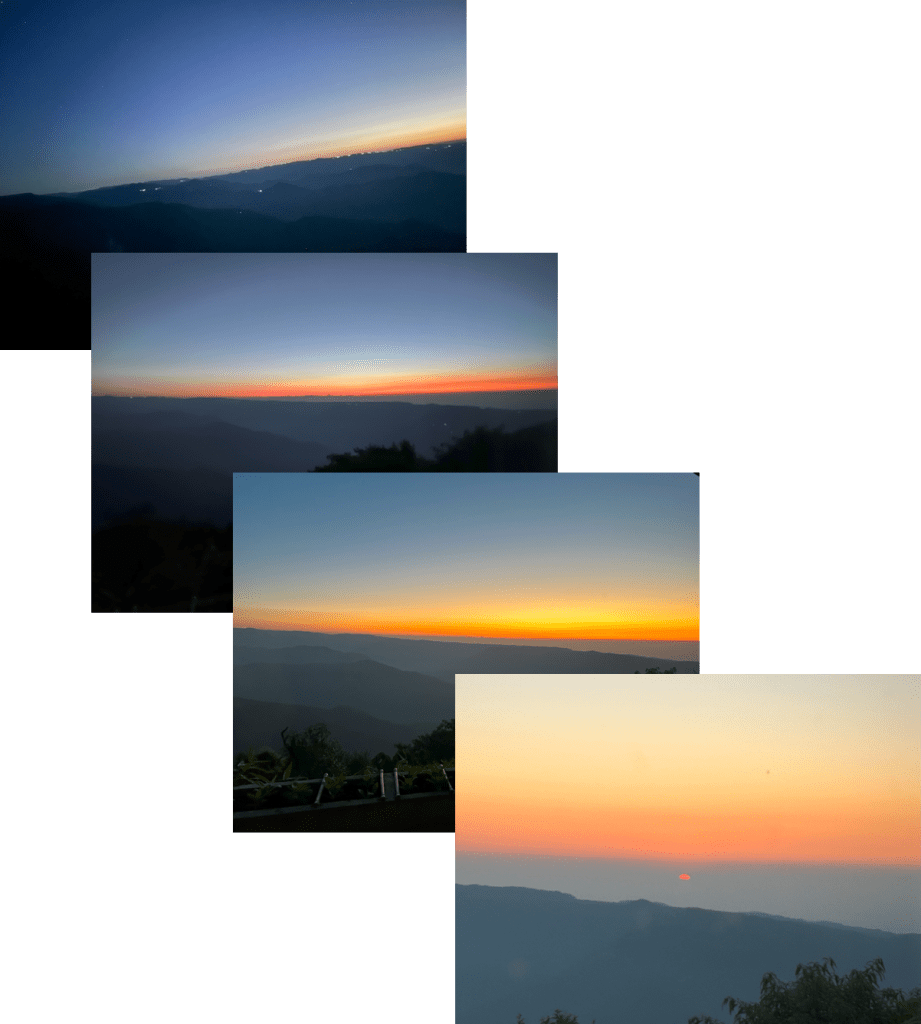
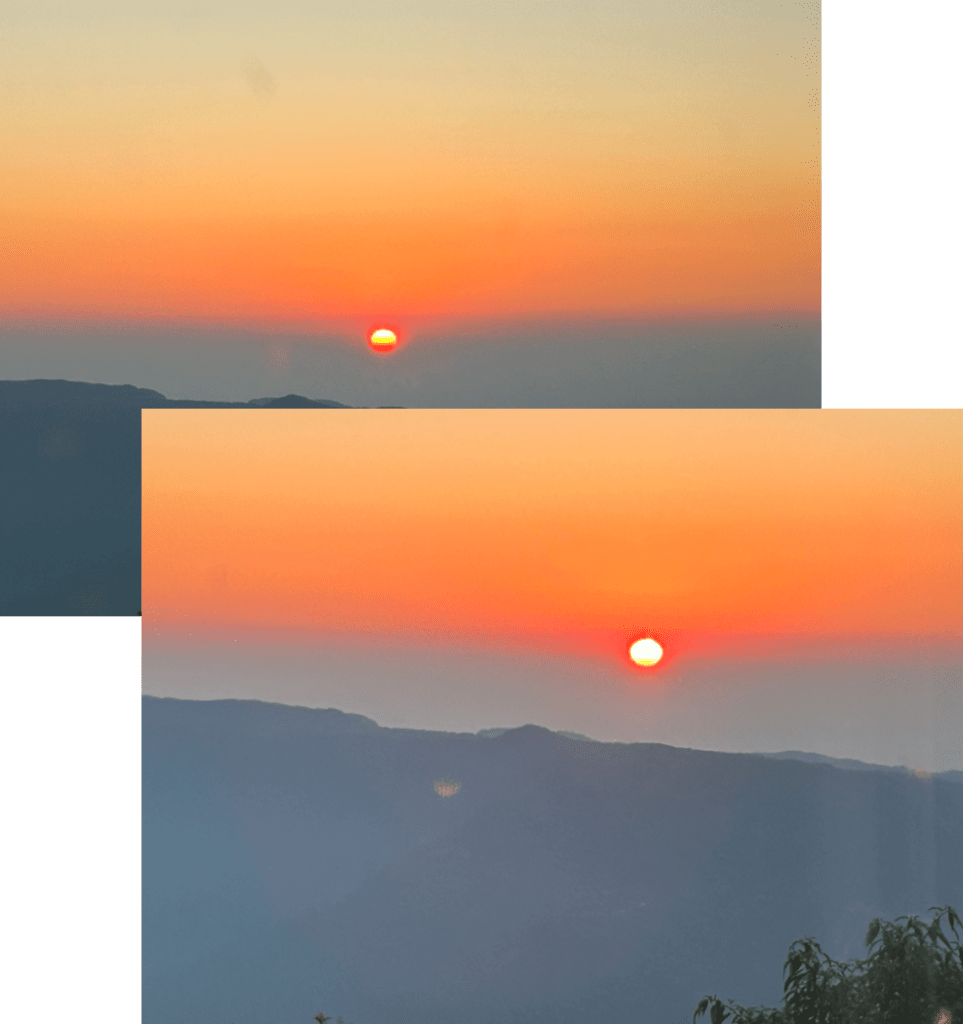
First activity of the day done. I was energized to find out what more is there.
Today the activity is to go to the Double Decker Living Root bridge. For that, we have to trek 2000 feet down, which is around 3500 steps, up and down difficult terrain. I was in high energy to go see this engineering skill of yore, by the Khasi tribesmen.
About half way down, my spirit and body, started waning. It was very tough. The surroundings continued to be splendid, but after more than 1000 steps, it was difficult to remain enthused with the surrounding. I stopped getting excited about the large colourful butterflies fleeting around, the scents of flowers, large spider webs, bird nests or the unknown variety of foliage around.
I was at the point of giving up, with the thoughts that going back all the way would be impossible. But my spirit came back rallying, telling me, that I have age and strength now, and moreover, I will not come back here before long, so off again.
While the spirit bounced back, my body didn’t and the rest of the journey became challenging. Now we were on a terrain, which was steep, sometimes going up or sometimes steep down. The steps, used by trekkers, were worn down, and disappeared in some places.
We came across a stream, and the only way was to jump across the rocks and cross a makeshift bamboo bridge. I wasn’t feeling adventurous anymore and dread was seeping in.
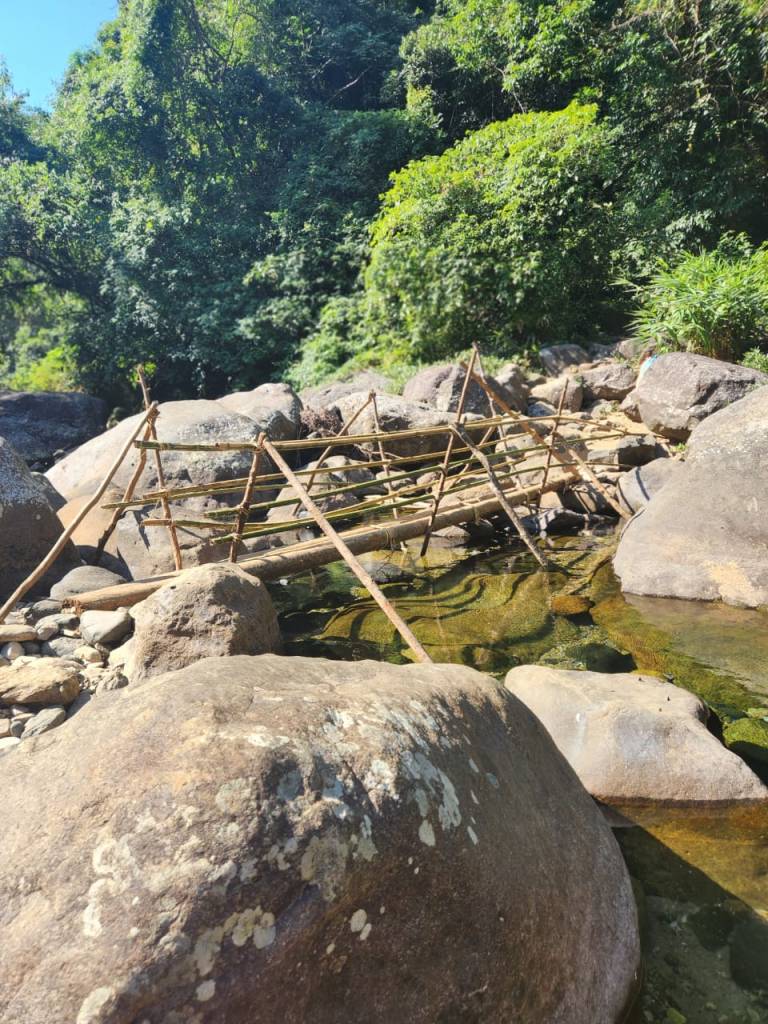
Way to Living Root Bridge
We now reached an iron bridge, which shook vigorously when we got on to it. Down below, several thousand feet, was a river raging. I didn’t wait to find out which river, my only intent was to cross this shaky bridge quickly, before god forbid, I plummet into that wild river.
With the bridge behind, there were few more hundreds of steps and steep terrain. Tourists who were coming back, gave us encouragement, that it is but few more steps and it is worth it. Finally, heaving and gasping, reached the site.
It was indeed something I had never seen before. It was a double decker root bridge. Built hundreds of years ago, these were built by tribes using aerial roots of Ficus plants. These roots are guided across streams and valleys, either through scaffolds of bamboo or cane, or sometimes through hollowed trunks of areca plants. As the roots lengthen, they grow in strength, and as long as the mother tree lives, the roots keep growing, and the bridge is functional. Matured bridges can carry the weight of more than 50 people at a time.
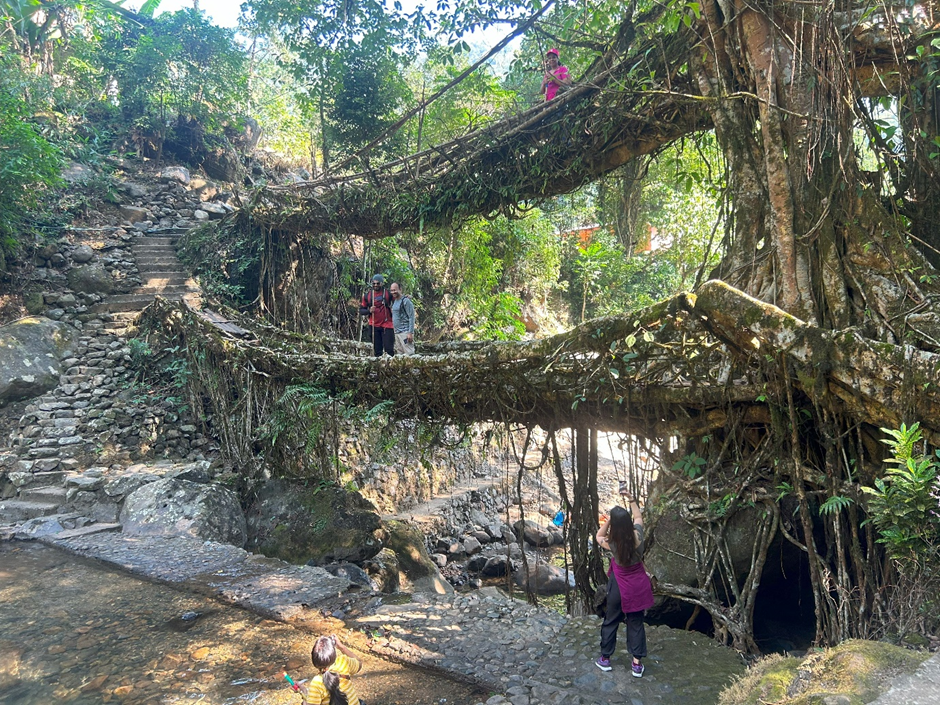
Double Decker Living Root Bridge
There was a small stream flowing down and we dipped our aching feet into the cold refreshing water. I was soon tickled by several tiny fish which I hadn’t spotted earlier. Oh! A foot spa!! A treat after the hard labour of coming here. Where the water was deeper, the fish were larger and all swarming towards all the feet dipped in.
Now the walk back. I would say determination, fear that I cannot be left behind alone in a jungle full of wild animals, and the hot bathtub back at the hotel kept me going. There were tonnes of encouragement from fellow travellers too, though. Whenever we would ask any of the local folks on how much more we have to climb, we would always be greeted by a cheery “1500 steps more”. Till the point we stopped believing and said that is the only number they seem to know. While it had taken almost 2 hours to reach the bridge, it took close to 3 hours to come back. But did it, it is a honour badge now, to boast to all and sundry.
Back in the hotel and a good hot bath, I was refreshed but acutely aware that my legs will be a mess the next day.
Day 5
And so it was, I woke up with aching body and stiff limbs. I exercised around the big lawn, hoping that movement will dissolve the lactic acid accumulation.
It was our day to checkout and head towards Kaziranga. It was a long ride, and 4 hours into the ride, my legs turned into logs. I could barely put one foot in front of other, I could not bend, sitting was terrible. I decided to distract myself from this distress and turned all my attention towards the surroundings.
The terrain and flora started changing. From the mountainous pines, firs and spruces, we were now seeing tropical trees of the plains, small tea gardens, pineapple plantation, cane and bamboo plants, and still lots of areca palm but oaks, ashok’s and banyans became a common sight.
As we neared Kaziranga, we could see snow peaked mountains. We had spotted these from Shillong as well. Those were the mountains in Arunachal Pradesh, some 8 hours away. They beckoned me and I left a promise that I will visit them soon.
After several pit stops, we reached Iora resort after dark. The Kaziranga National Park is in Golaghat and Nagaon districts in Assam, spread across 1000 square kilometres. We were to visit the buffer zones.
I could barely walk now, but managed to reach my room, after having to climb more stairs, woefully. My worry was that I wouldn’t be able to go for the elephant ride with this pain. But I have to, that is what I wanted to do all along, see the famed one horned rhinos with my own eyes.
Day 6
I couldn’t sleep due to this worry and the pain and stiffness, so was up at 3 am and decided to get ready. The ride was at 5:30 am. And I needed all that time to build my will power and resolve.
So the serenading call from Lokhii Purnima did lift my spirit. I managed to sit on her back. There were 2 benches on either side carrying 4 passengers. I felt no pain, as if her spirit melted into mine. She was eager to show me the one horned rhino’s and so was I, and oh, we saw so many of them.
These great beasts, with heavy armour of skins covering their body, were unruffled, busy feeding nonstop. We saw big bull rhino’s, mother rhino’s with babies in tow, all busy feeding, making up for a sleepless night, being watchful of predators. The cranes were close to the rhinos and the buffaloes, providing regular salon services.
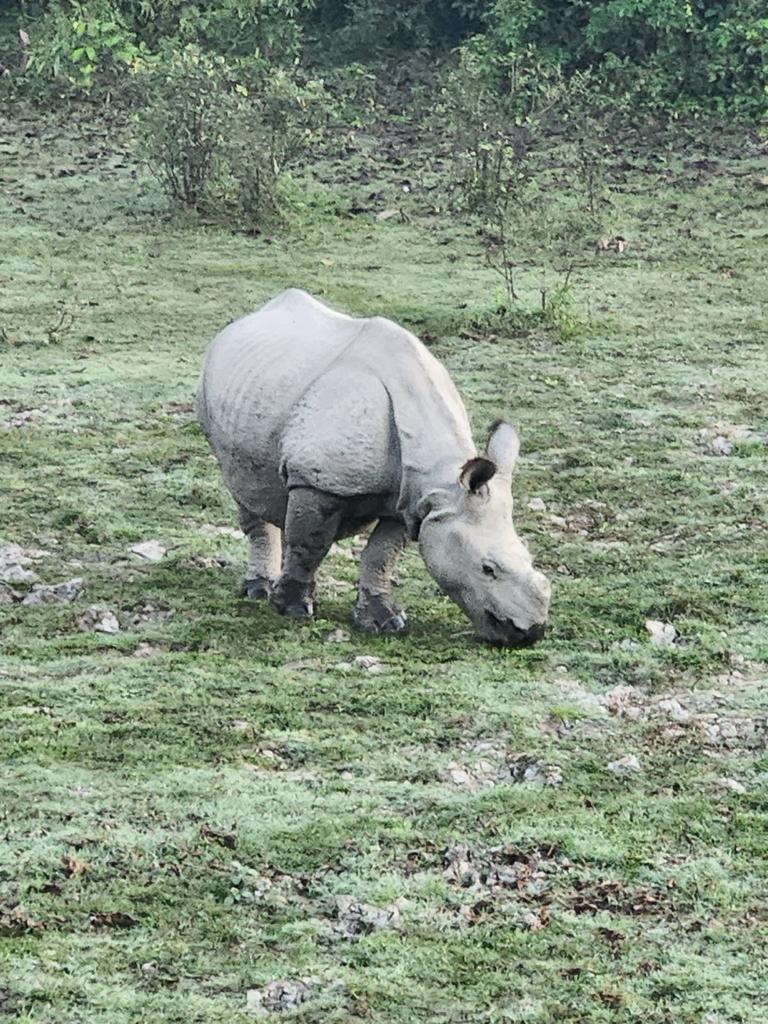
Busy feeding
Lokhii would turn around and give her passengers from both her sides the premium view.
Most of the area was swamp and marshlands and few hillocks. I had heard that the hillocks were manmade to allow animals to move to higher grounds during floods.
We saw the rising sun, low lying mists over the small lakes and the sun coming out from behind a small hillock. The lakes were filled with lotus, water hyacinths and lilies. It was feeding time for the animals and birds. Numerous flocks of birds, rose from the scattered trees flying off to catch their daily worms. The lakesides were filled with cranes, egrets, herons, cormorants, horn bills. We spotted a few water buffaloes and several herds of deer. The elephant pathways respected the boundaries of the feeding animals and we watched and gaped from a distance.
The 50 minute ride was over too soon.
I wished Lokhii well and thanked her and her mahout.
We had a hearty breakfast and headed out to the Biodiversity park. The park is built over 6 acres of land and has a greenhouse with about 600 species of orchid, sourced from the hills of North East. We were given a guided tour by a young lady who took us through how the plants are maintained, naturally fertilized and pollinated. I got to see the insectivorous one, which I had read about but never seen before.
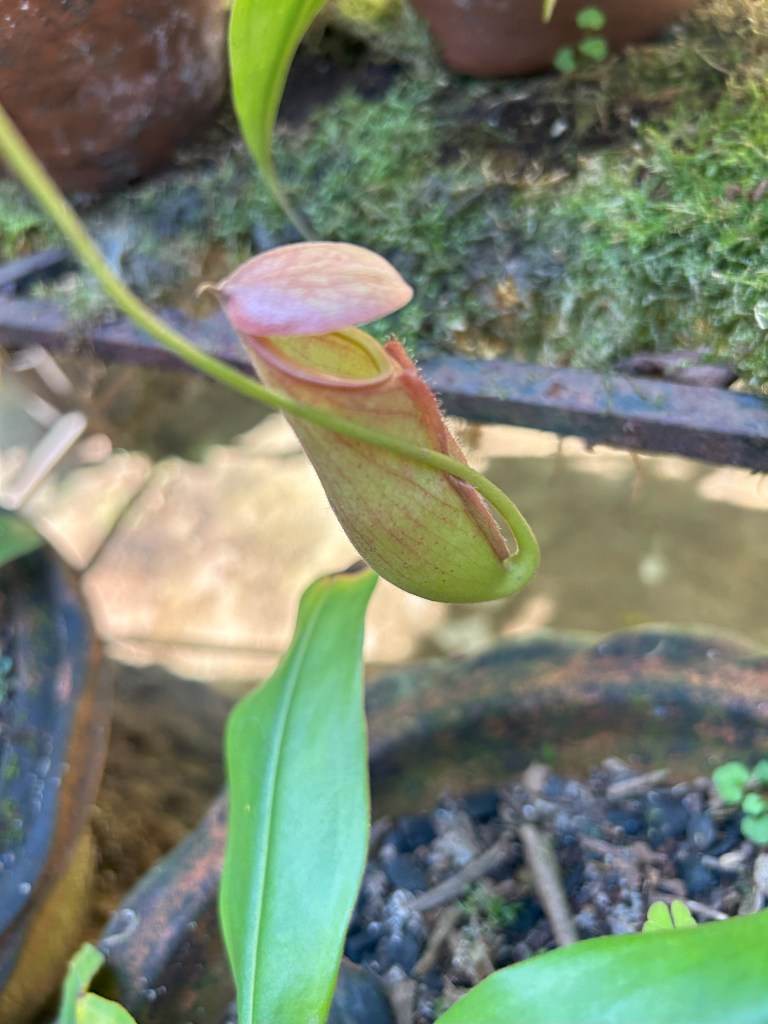
Insectivorous Orchid
The park also has a medicinal plant, bamboo and cane, fruit gardens and another greenhouse with cacti from around the world, notably Mexico or Burma. The museum of Assam’s crafts and culture, had the jacquard weaving machines on display, as also the history of the textile industry. A cultural show of Assamese performance of Bihu, Jumur and other folk dances was going on. We did some handicraft shopping and then it was time for Assamese lunch and Jeep Safari.
While Lokhii had taken us to the swampy lands, the jeep safari would take us far into the grasslands and woodlands.
The grasslands, filled with tall elephant grass, proved its name, as we saw a small herd of elephants suddenly emerging and crossing our path and soon disappearing in them.
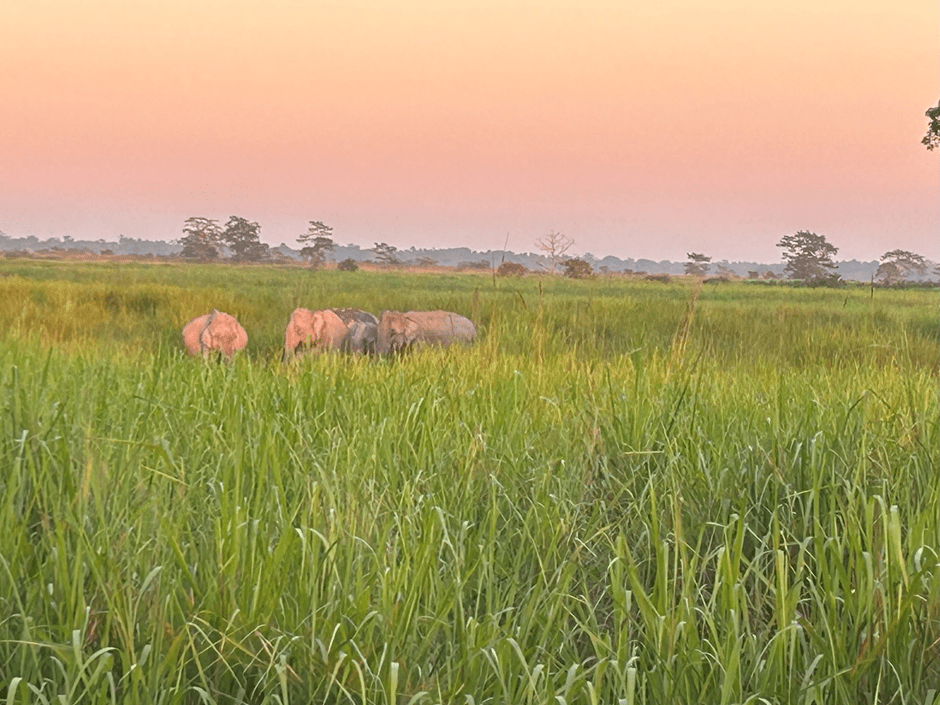
Wild Elephants
In the outer edges of the woodland, we spotted hog deer, swamp deer, sambar herds busy feeding with their ears raised in high alert, to catch the slightest sound of danger, and be ready to dash and disappear into the woodland.
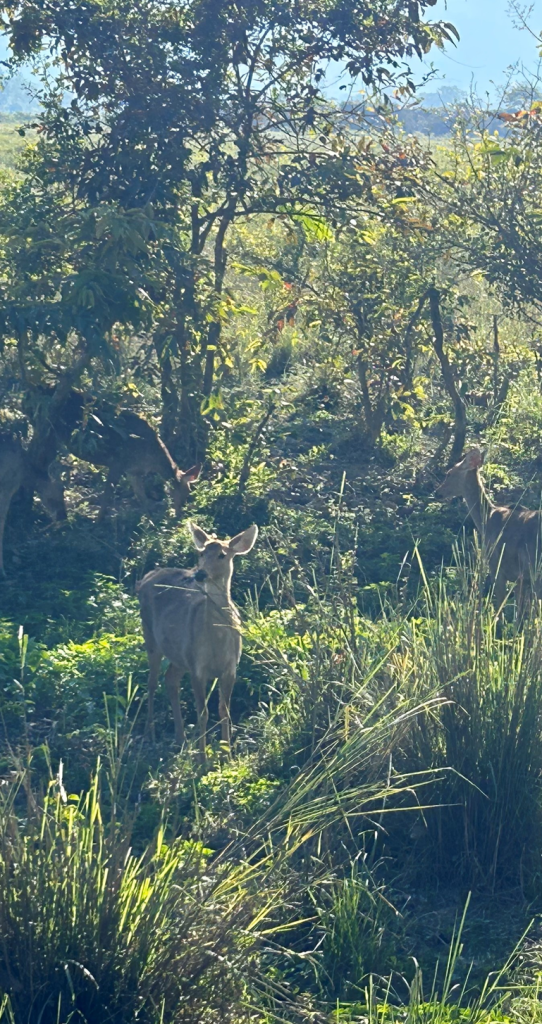
Swamp Deer
The woodland had broad leaved trees like pithraj, elephant apple, magnolia, figs, cinnamon, myrtles, siris, spider tree and many more. As we entered the wooded areas, it was suddenly cool, dark with the sunrays playing light and shadow, perfect setting for the reclusive ones to remain camouflaged.
We spotted many different kinds of birds, and without our guide’s knowledge, I would have not spotted or identified any of them.
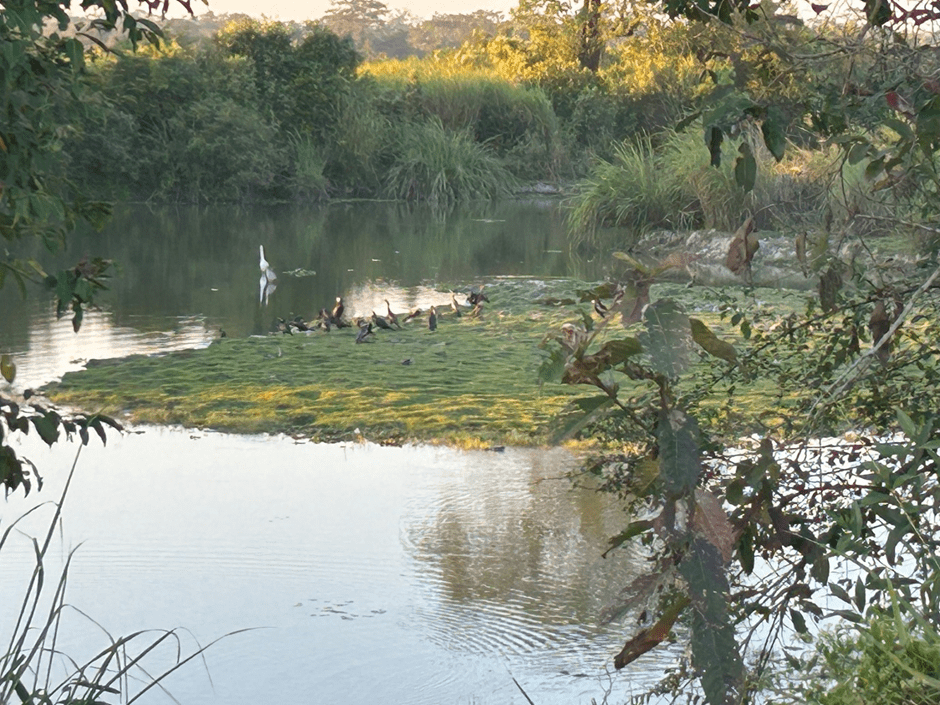
Feeding ground
There were gaggle of geese and ducks near the bheels.
A black necked stork, stood on one leg, on the bank of River Diphlu, like a meditating ascetic, but actually patiently waiting to catch its prey. We spotted another black necked stork atop a tree. This one too, sitting very still.
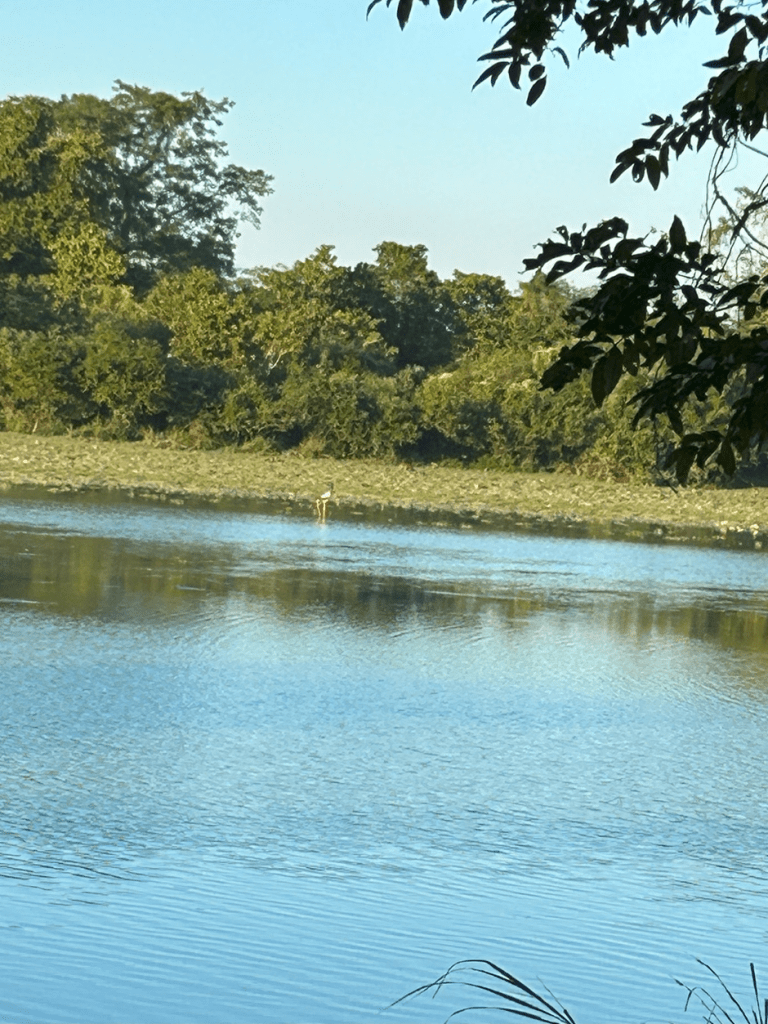
Patience brings rewards
There were adjutants and horn bills near too.

Co-existence
We spotted a fish eagle with its prey still in its beak, partially hidden in the branches.
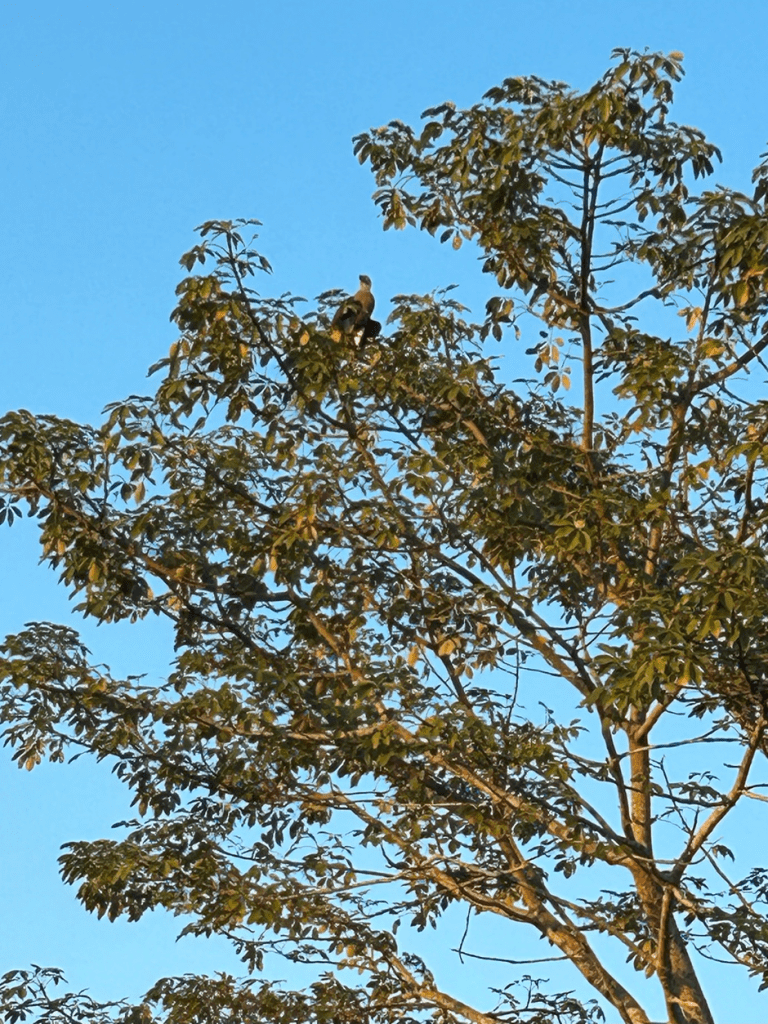
Fish Eagle
Rhinos, several of them now, near the lakes, or the grassland, or disappearing into the woodland.
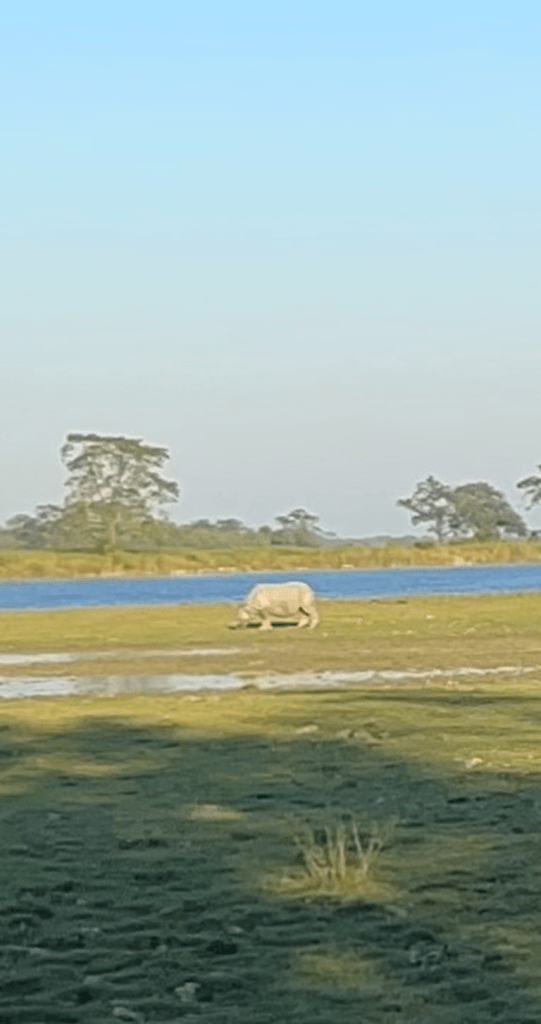
Grazing on
A monitor lizard, blending so well with the tree trunk it was peeking out from, appeared like a statue.
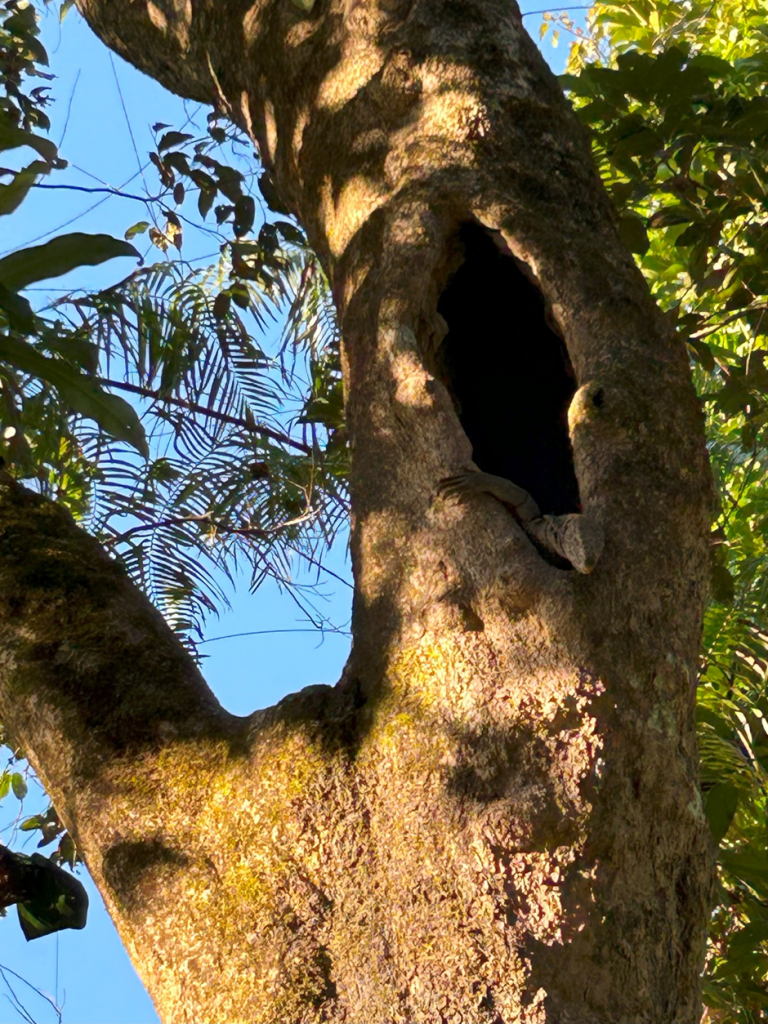
Monitor Lizard
Water buffaloes with their very menacing horns.
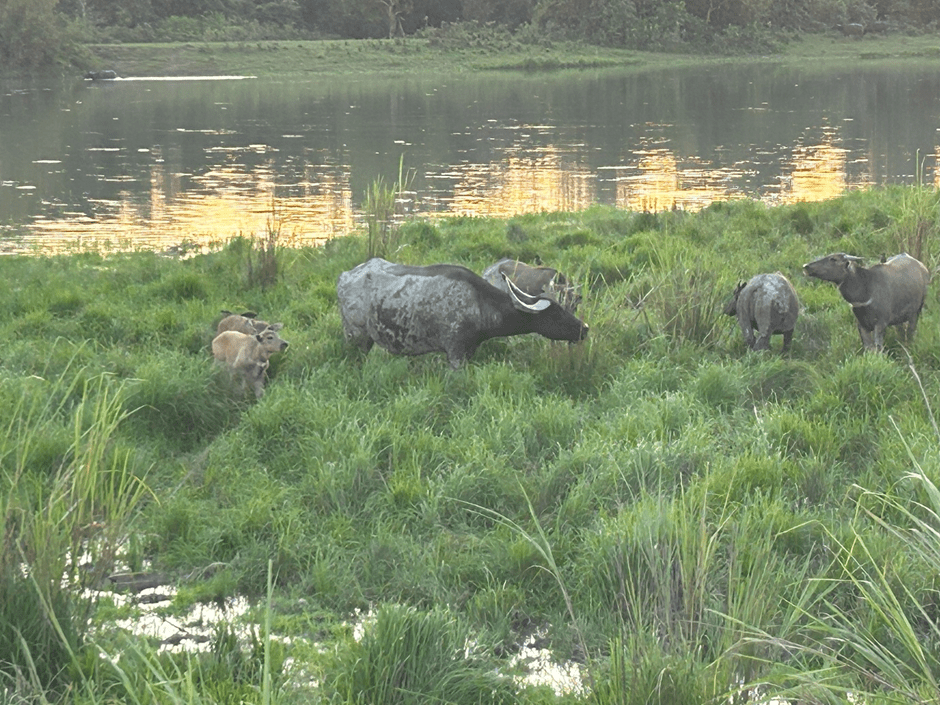
Water Buffaloes
The Assamese macaque were seen fleeting across branches.
We crossed through several bheels and in one of the larger ones we show a family of turtles sun bathing on a broken tree trunk perched atop the water. We spotted an otter in one of the canals we crossed.

Turtles
A wild rooster, with its colourful plumes, strutted across our path, pecking the ground for insects.
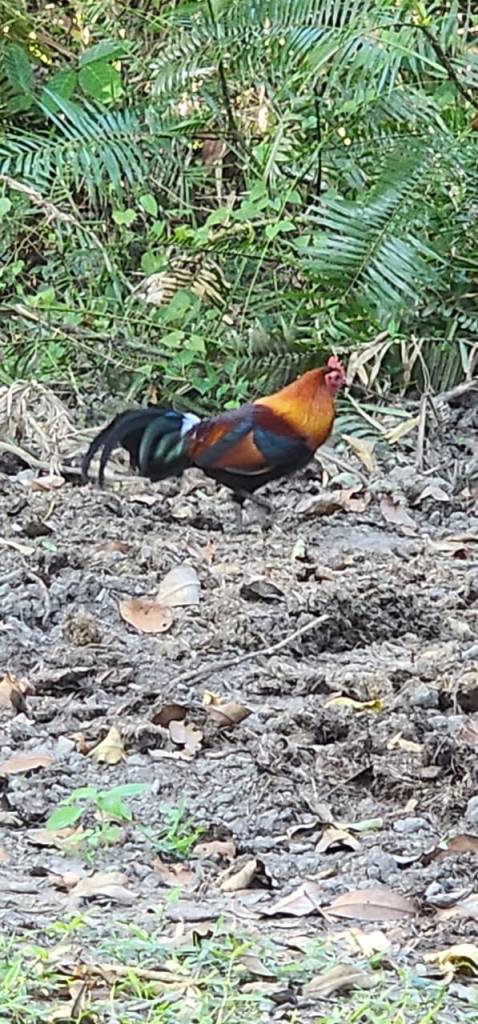
Wild Rooster
The anthills, we saw, were as tall as an elephant.
Our safari driver, showed tiger claw marks on some of the large trees we crossed. All the time I was on the lookout for a tiger. But it was difficult. The sun casted a striped light and shadow through the foliage, and any tiger, if present would have camouflaged very well. If they were there, they would be hiding in the woodland and grassland and wouldn’t venture out in the noise.
Good things end to soon, and after a one hour safari, we headed towards the exit gate and spotted the same elephant family which had earlier crossed our path.
The exit gate had statues of 2 adults and 1 baby rhinos. The scripture said that in 2021, a stockpile of rhino horns were consigned to flames by the then Governor of the state, sending a signal to those involved in illegal trade and poaching and to demonstrate that rhino horns do not have any medicinal values. The ash was used to build the Rhino statues.
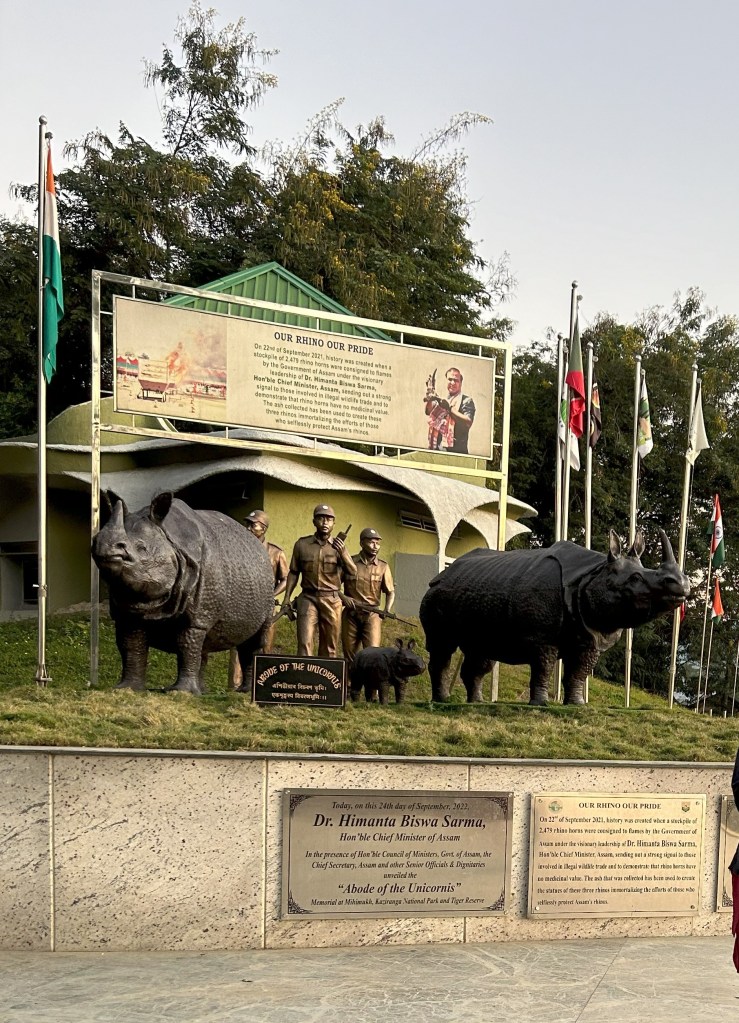
Rhinos made from ashes of poached horns
I was overwhelmed at what I could see, all the time, acutely aware of how little I know of flora and fauna of my own country, and how deprived I am from all of this by living in a city.
We do have greenery in our cities but they lack varieties and the trees and plants are mostly dust laden and drooping. There is abundance of pigeons but where is the diversity of birds such as crows, cuckoos, parrots, sparrow, or shawls.
The journey came to an end, with me enlightened about a world, so different than mine, and left with an aching feeling that as mankind we are really pushing the limits of our ultimate nurturer, mother earth.
 TheEbbandFlow