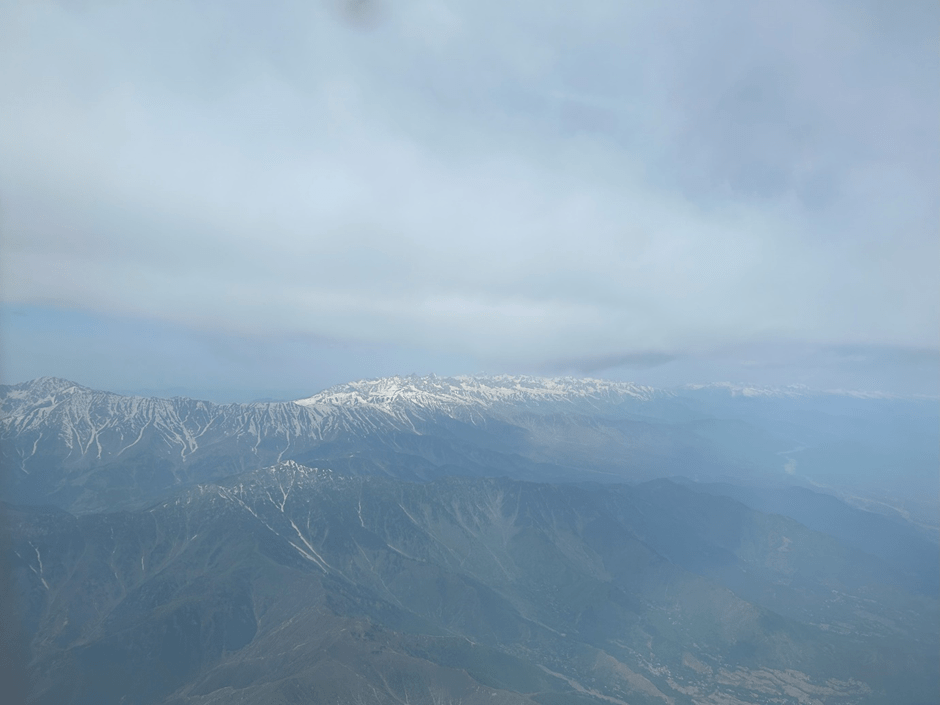
We crossed several hundred kilometers of flat land with meandering rivers. And suddenly breaking through the clouds, jutting out majestically, heralded the presence of the Paradise which we were about to descend to.
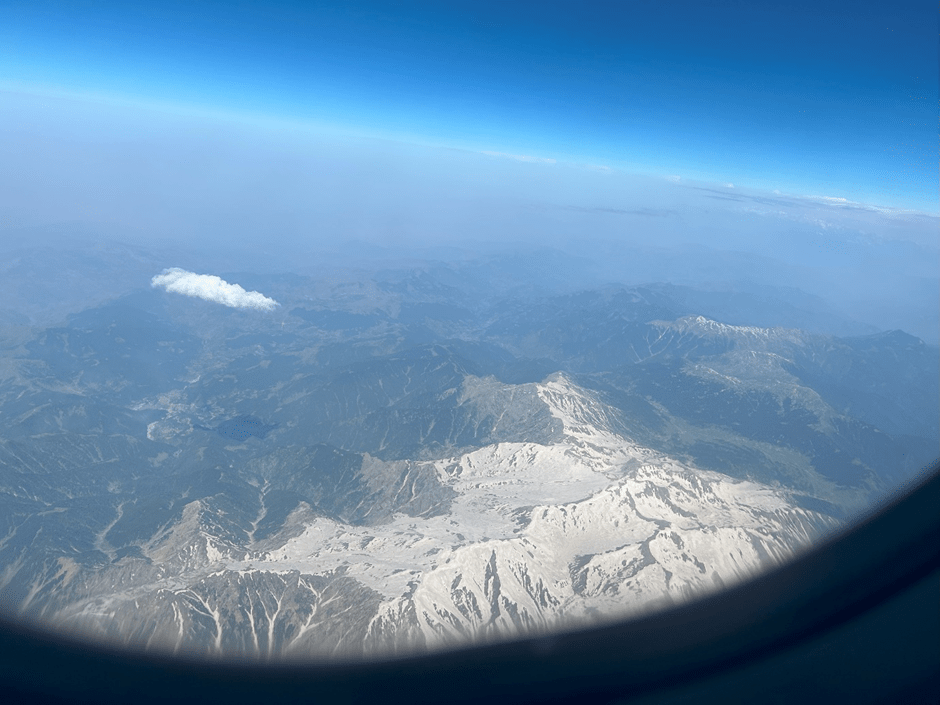
This was soon followed by the captain of the airship announcing that we are circling Srinagar and are about to descend.
I had never been to Kashmir and I looked as far away and down as possible. Waves and waves of mountain ranges, some capped with white fringes, others dark and solemn, and down below, still appearing dark green stood the city, famed for its lakes and gardens.
It didn’t take us long to get out of the airport, traverse through crowded bazaars and finally reach the gate from which we were to board a shikhara and go for our stay in a houseboat.
Both were a first for me—Kashmir and a Houseboat stay.
The Dal and Nageen lakes glistened in the mild sunshine and gently rocked the lines of shikharas. We boarded into one along with our luggage. It didn’t really seem very sturdy or safe, but it was exactly like what I had seen in movies. A large duvet like seat and a small narrow one. You can lie down on the duvet as the boatman slowly paddled his way towards the other bank where the houseboats were.
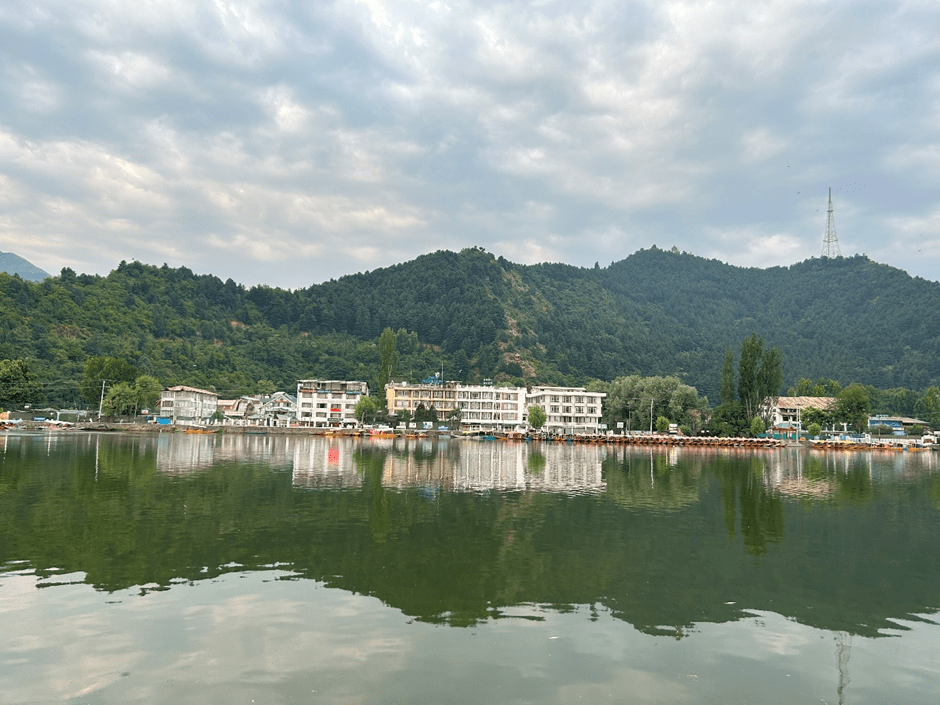

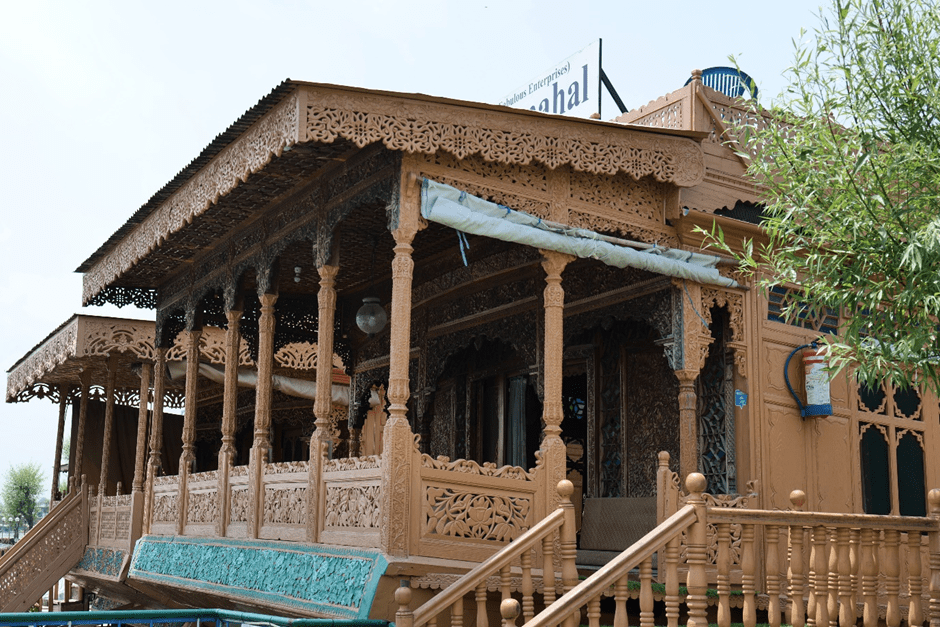
Our houseboat had 2 floors with exquisitely carved floral designs on its walnut wood walls. The furniture also bore the matching floral patterns. The houseboat overlooked the Dal lake which was bordered by the Zabarwan range on one side and the Shivalik hills on the other.
As I sat peacefully enjoying the hustle bustle, I was amused to see the intense commercial activities going around me. The shikharas were the carts and hawkers we see on our roads. I saw hawkers on shikharas selling every imaginable thing—cosmetics, jewelry, souvenirs, fruit, snacks, tea, coffee, drinks, flowers, winter and summer clothes, and one of them even called out to me for a foot massage.
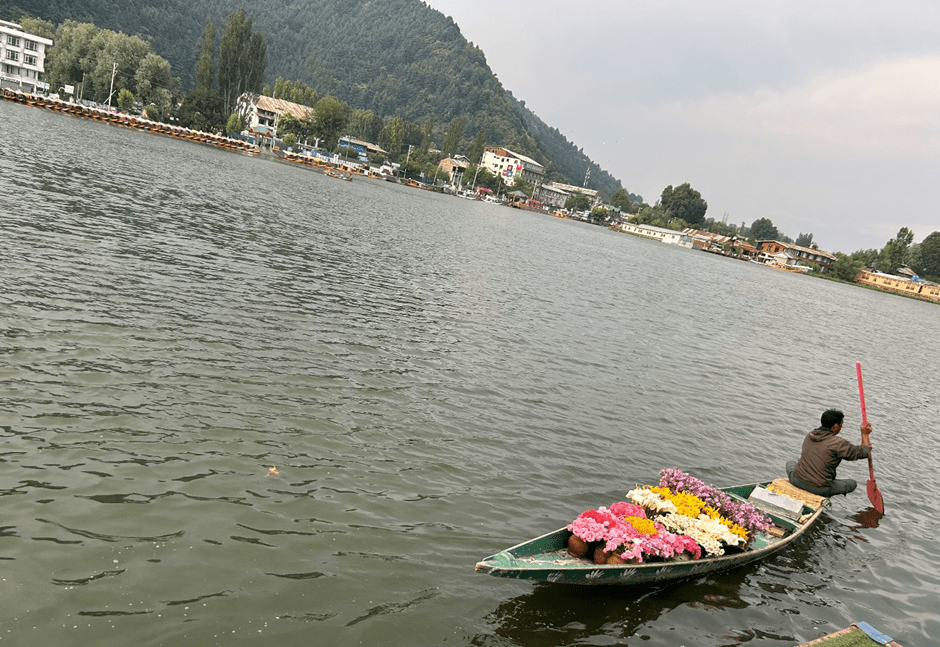
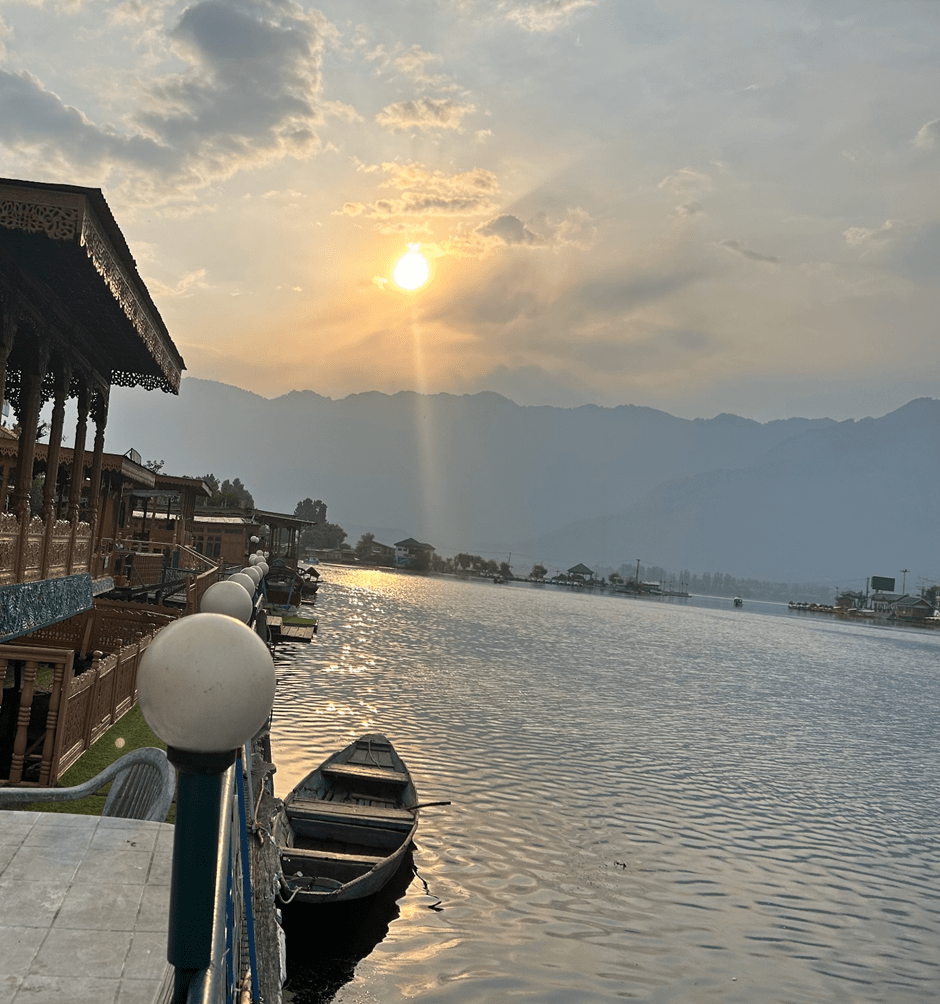
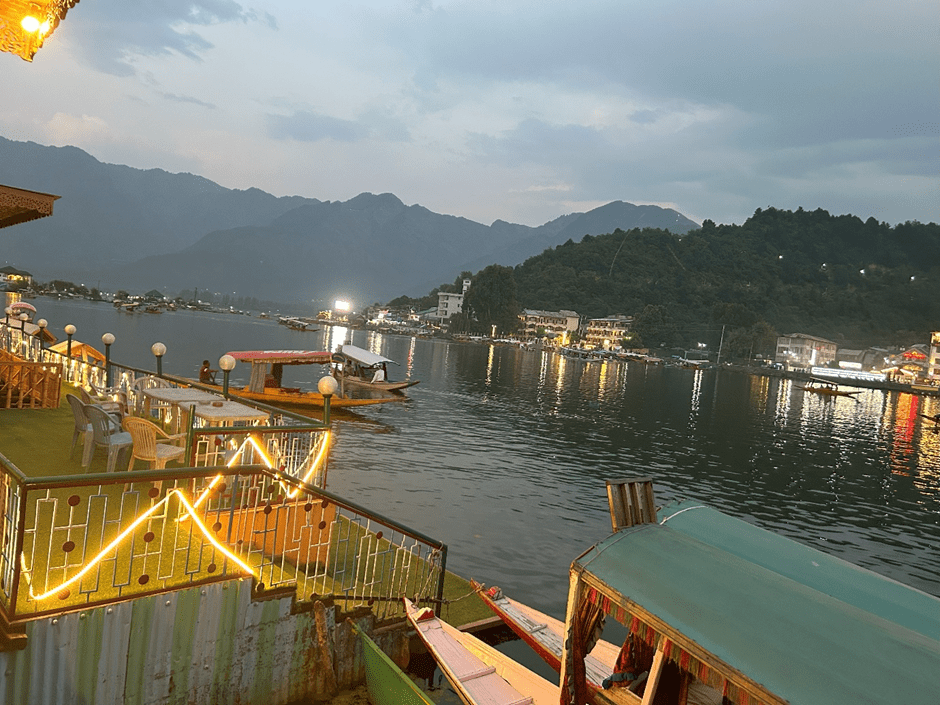
When we boarded a shikhara for a ride, we were soon accosted by these hawking shikharas selling their wares.
During our shikhara ride, I spotted birds swooping in and deftly catching fish, unmindful of the bustling trade and commerce around. The lake is huge and there is enough for all to subsist. We crossed the floating Post Office, the only one of its kinds. There was also a floating commercial center built in the middle, displaying traditional Kashmiri clothes and carpets.
I spent the night in the houseboat. Sometimes feeling the gentle rocking but mostly sleeping soundly only to be woken up early in the morning by a kite screeching as he began his hunt.
Day 2
Post breakfast, we made our way to visit the ancient Shiv temple, built on top of a hill in the Zabarwan range. It was built in the 7th century. Though there has been evidence unearthed that it would have existed Before Christ. In the 8th century, Adi Shankaracharya had visited the shrine. We had to board a government bus which took us up the hill. We then walked uphill 900 meters and then climbed 275 steps to reach the Shiva temple. A tiny, temple, built of stones, typical of that age, but now being held together by scaffolds. From atop the hill, as we stood in line to enter the inner sanctorum, we could view all of Srinagar city, its lakes, gardens but mostly the densely populated houses, looking like miniatures.
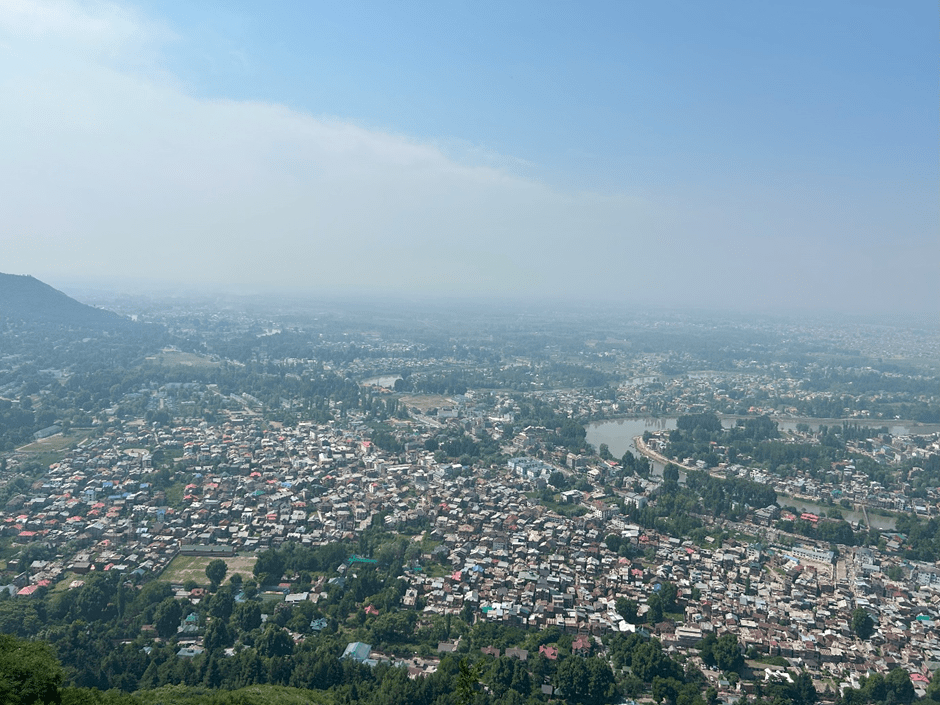
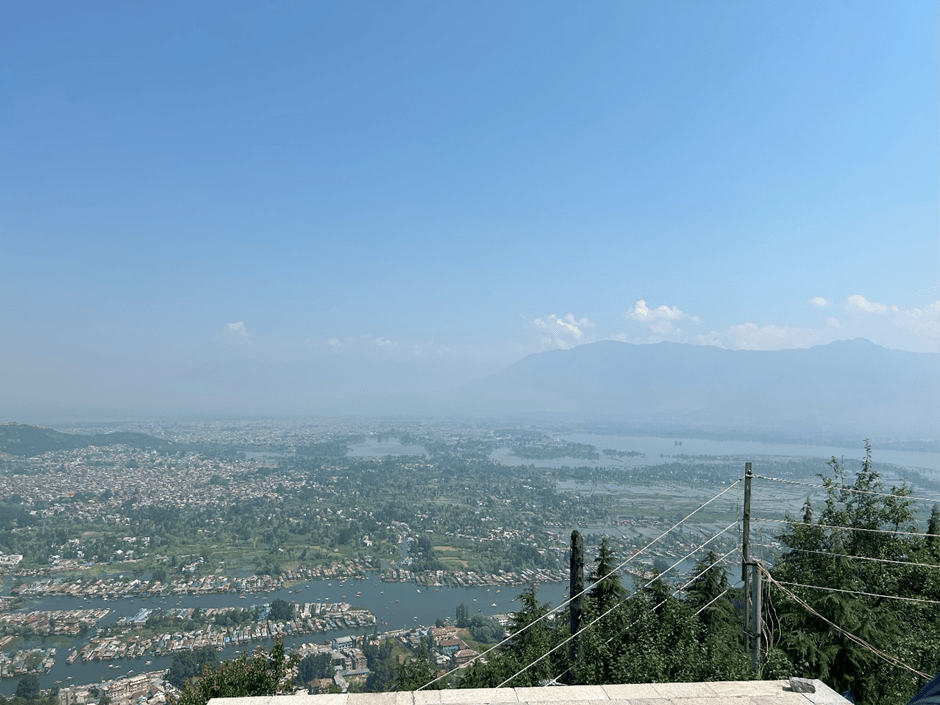
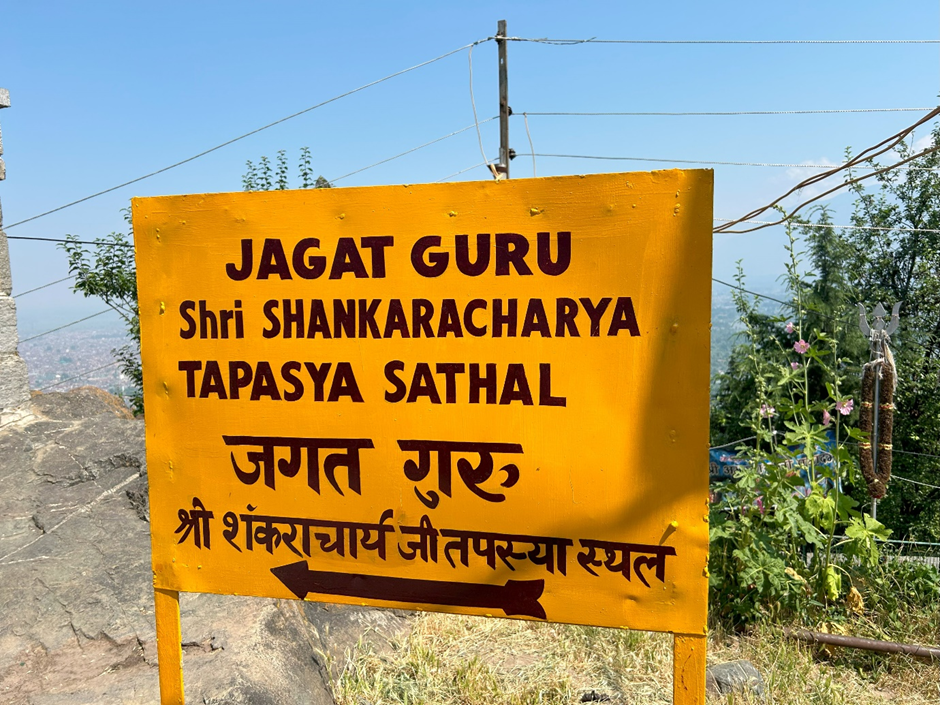
A good bit of cardio and strength exercise with the up and down walk from the hill and we were famished and we devoured a sumptuous lunch.
While the morning was seeped with Hindu culture, religion and heritage, the afternoon exposed us to the grandeur of the Moghuls in the shape of Nishat Bagh.
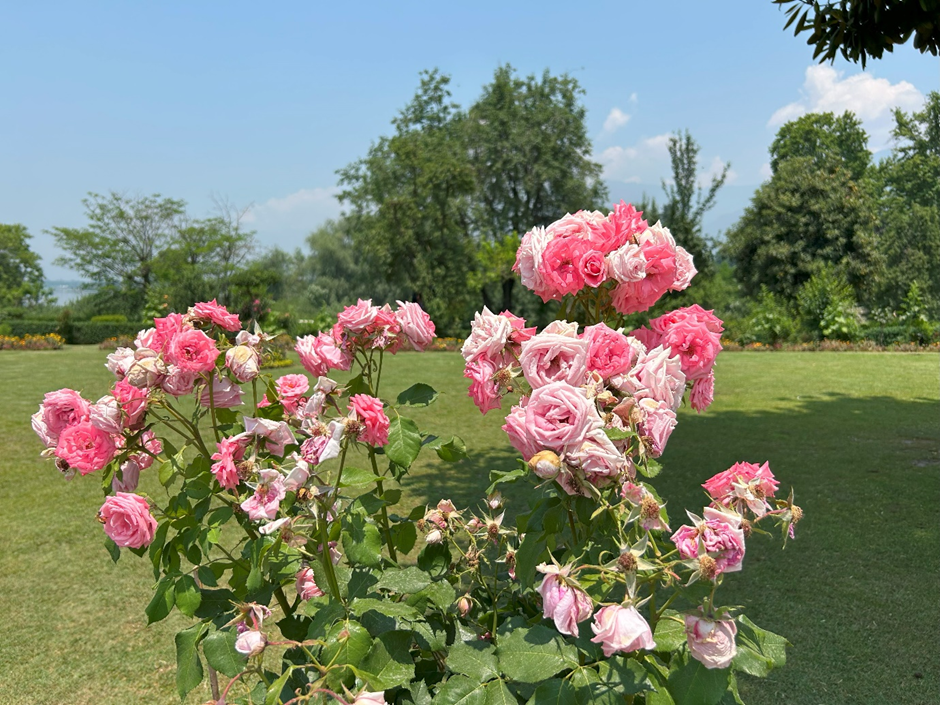
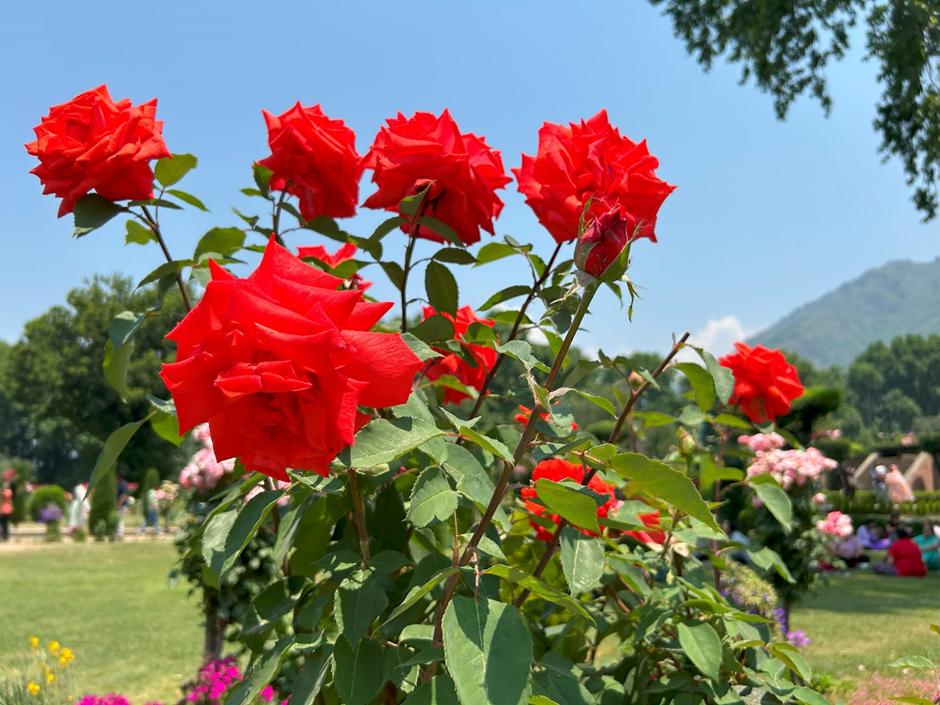
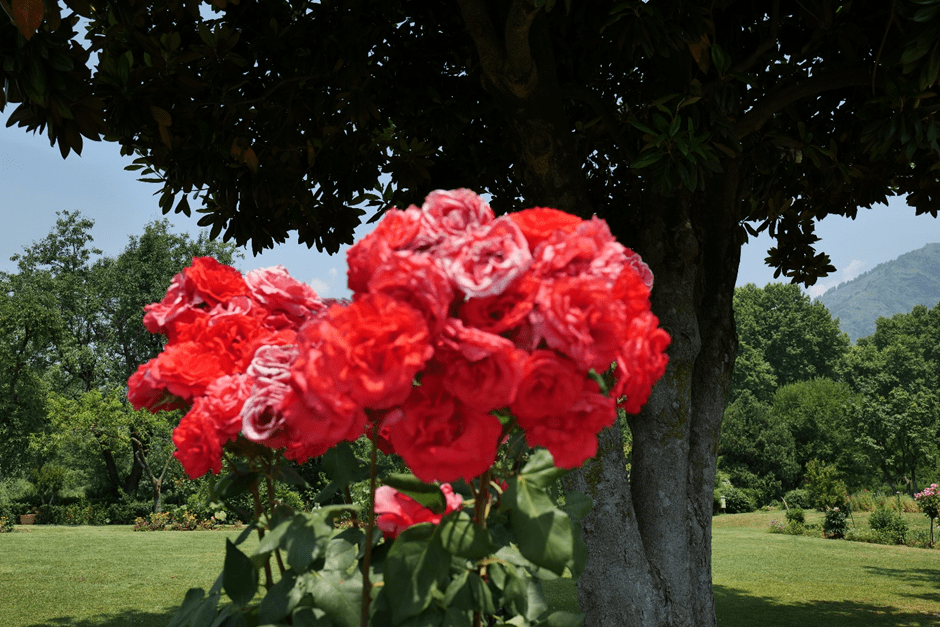
A multi acre park built over seven steps on the slopes of the Shivalik hills. It overlooked the Dal Lake and just across we could see the domes of Hazrat Bal glistening. It was a pleasant weather and it felt wonderful to traverse the park across its seven layers, dotted with tall trees of walnut, pines, fir, birch and many others. The landscape is still maintained the way it was built 400 hundred years ago with numerous varieties of flowers, chief among them were the roses. I had never seen so many hues of red, yellow, orange, white, blue, purple.
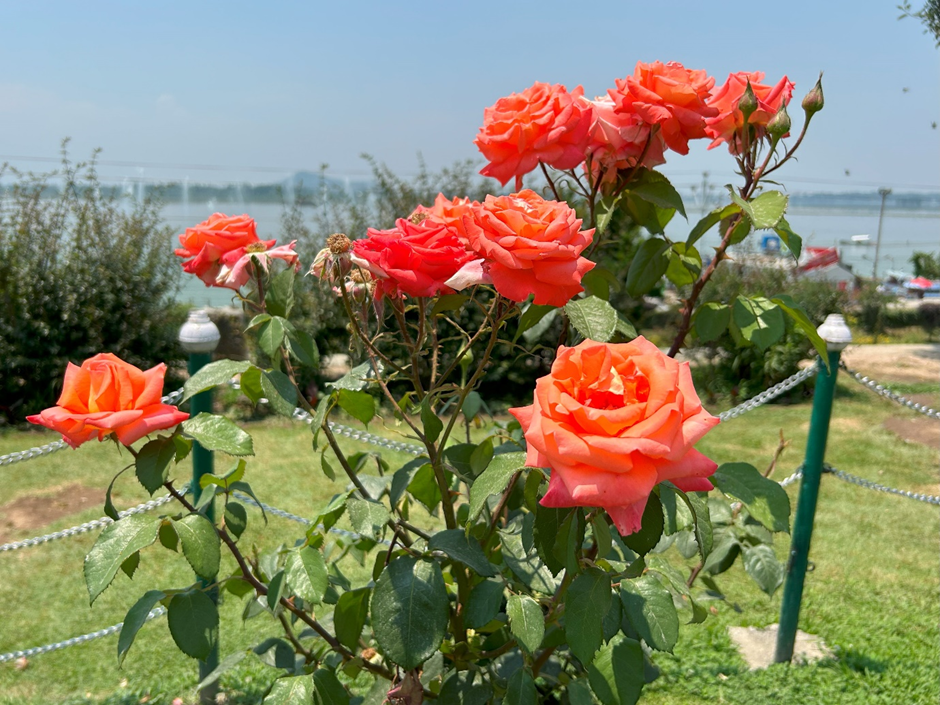
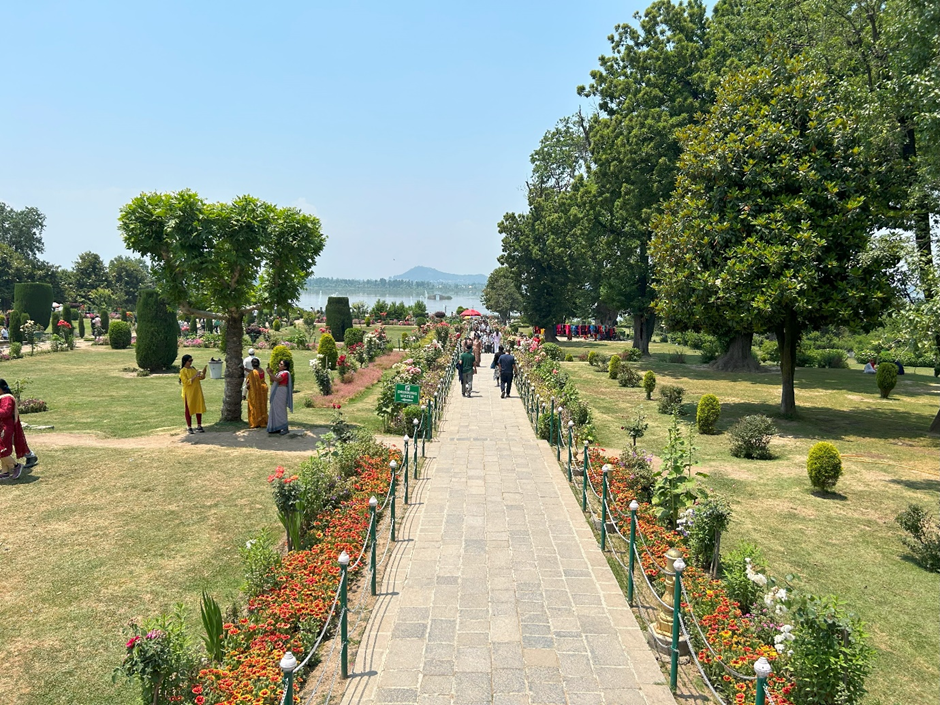
We proceeded from Nishat Bagh towards Pahalgam which was going to be our night halt.
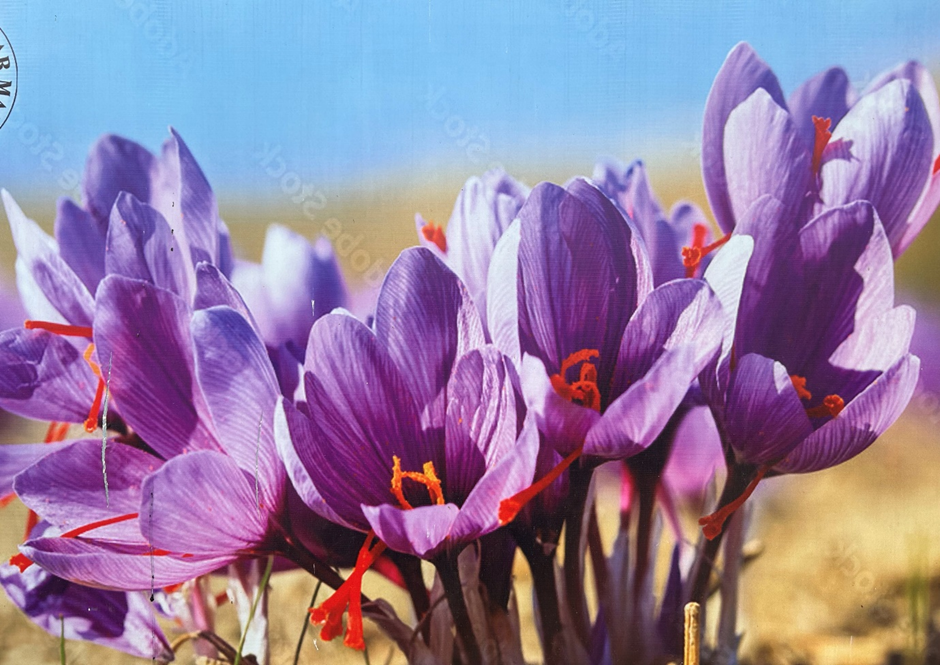
But on the way, we stopped at Pampore. This area is known for saffron. The only place in India where this is grown. Saffron is also grown in Iran and Spain but their variety, taste, colour are different. In India, it is grown as organically as possible, without much irrigation or any fertilizer. It flowers between mid October to mid November and the saffron fields are aglow with bright purple coloured flowers, the only visible part of the plant. These flowers are then plucked gently and its peduncles are removed one by one which forms the basis of Saffron. The expert who was taking us through the process told us that the plant is so delicate that it does not survive beyond the 20 odd kilometers of diameter of Pampore. Strange, is it to do the soil or the climate, didn’t get the answer.
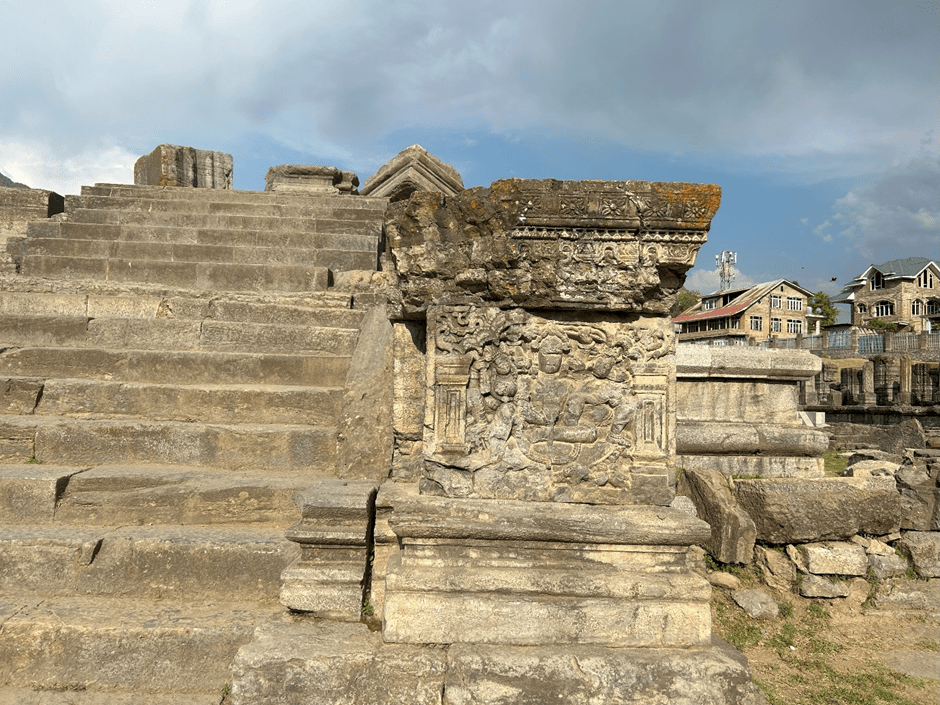
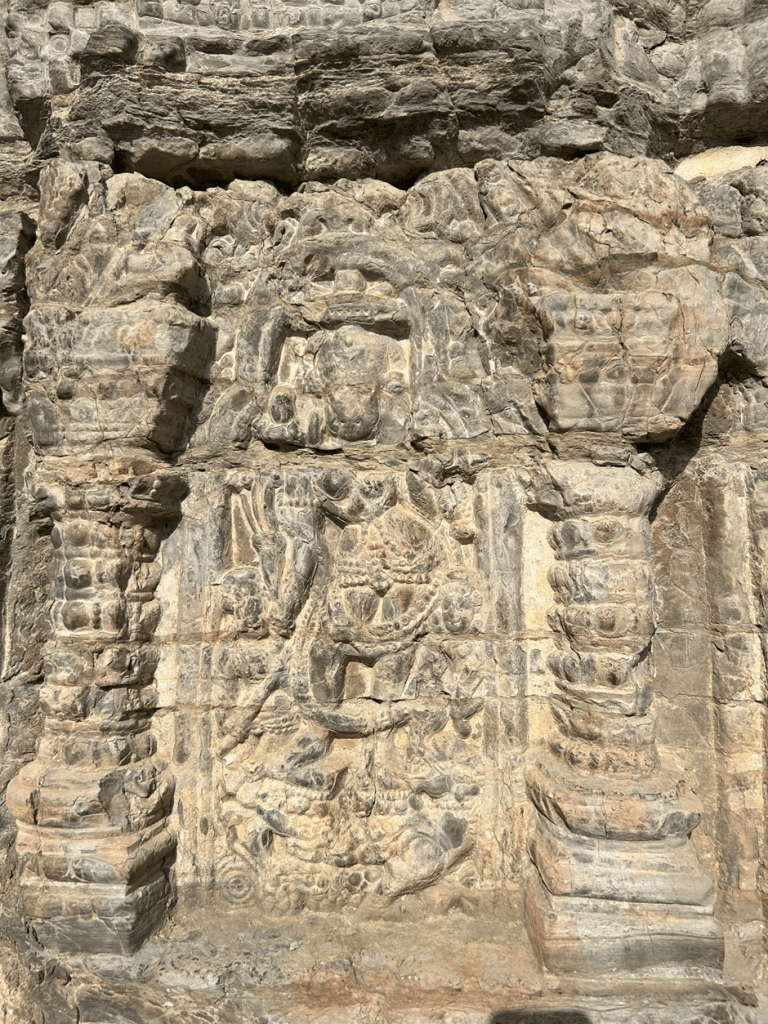
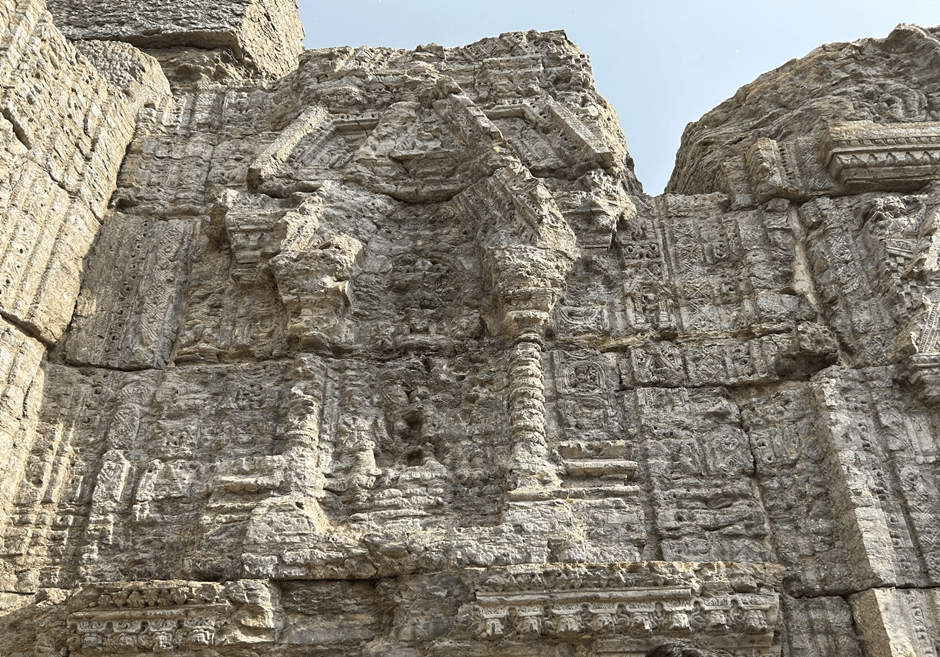
Armed with few tiny, but expensive boxes, of saffron, we headed towards Avantipura where a sad story greeted us. The ruins of Shiva and Vishnu Temples, Avantishwar and Avantiswami, respectively. This again took us back to the 8th century when these temples were built by Maharaja Avantivarman, the founder of the Utpala dynasty. The Shiv temple was built in sandstone and both temples depict stone carvings of Hindu deities and stories on what is left as walls. But they were soon to be destroyed by Sikander Butshikhan, who systematically burnt and razed all the Hindu temples in this region. This event was also followed by nature’s fury, or was it agony, when the area witnessed intense earthquakes and flooding, adding to further destructions to the religious and historic sites.


We reached Pahalgam in the evening. The name Pahalgam has several stories behind it. Old Hindu myth says it was earlier called Balgaon as Shiva left his bull, Nandi here, before proceeding to the Kailash mountains. Another myth says that Pahal means shepherd locally and since herding sheep and goat are one of the main livelihood of the locals, it got its name.
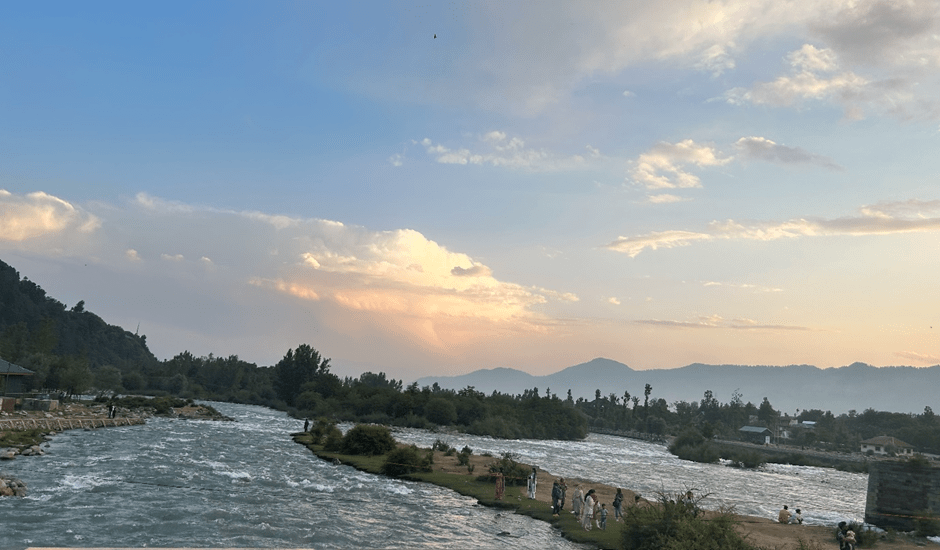
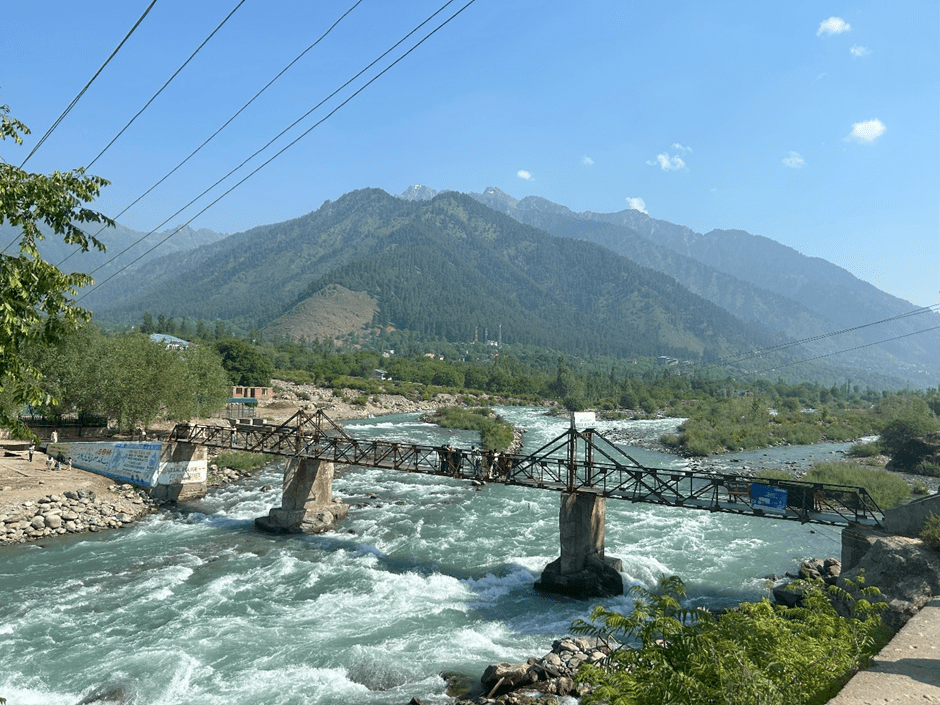
Our hotel was next to the gushing Lidder river. A narrow strip of a river, but so ferocious, very strong current, gurgling noisily down, and meandering next to the highway, NH44.
Day 3
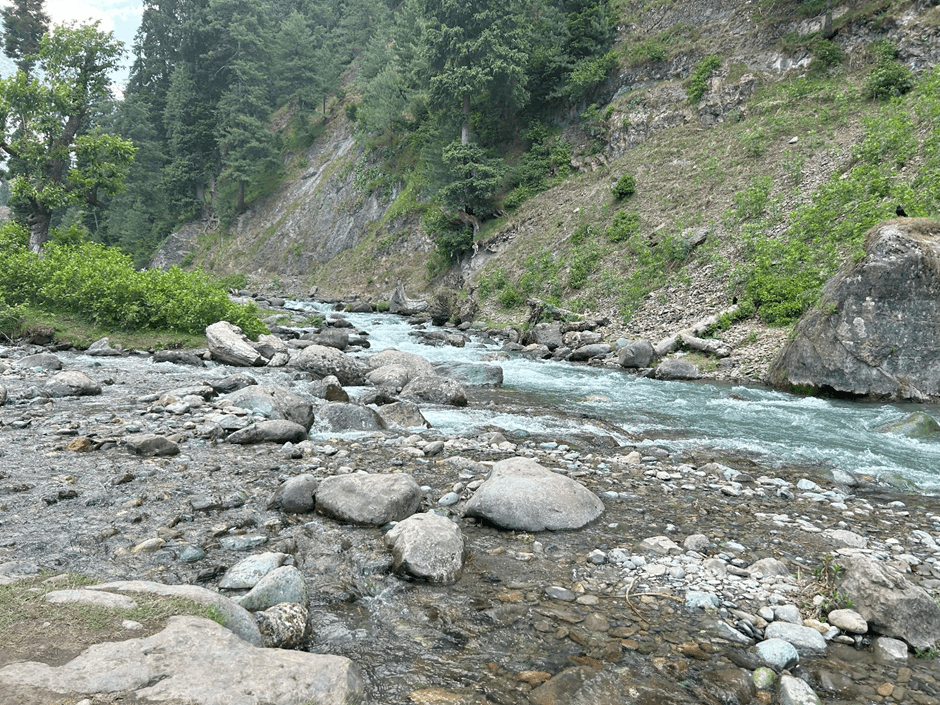
We started early next day, but not before freeing ourselves from local hawkers trying to sell us walnuts. We travelled alongside the gushing Lidder River, sometimes it flowed with strong currents and sometimes quietly like a shy bride, but all the time never far away from the road.
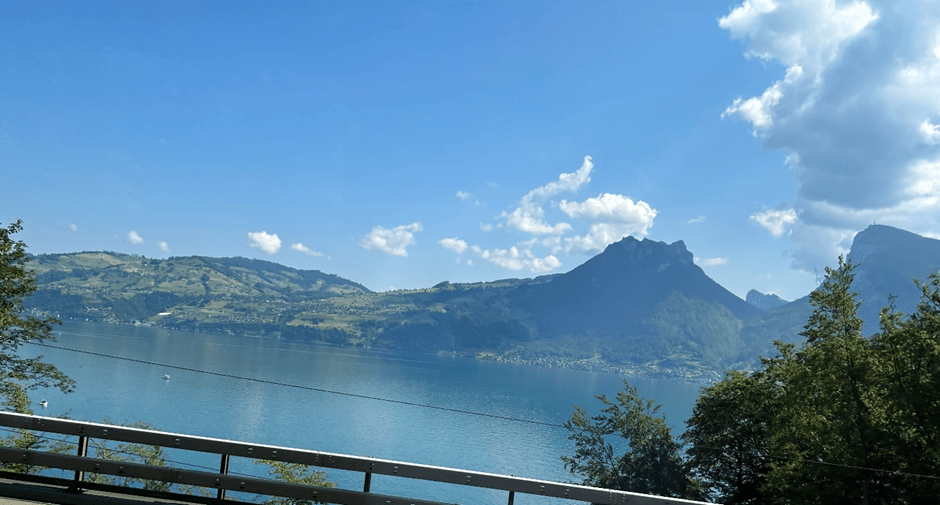
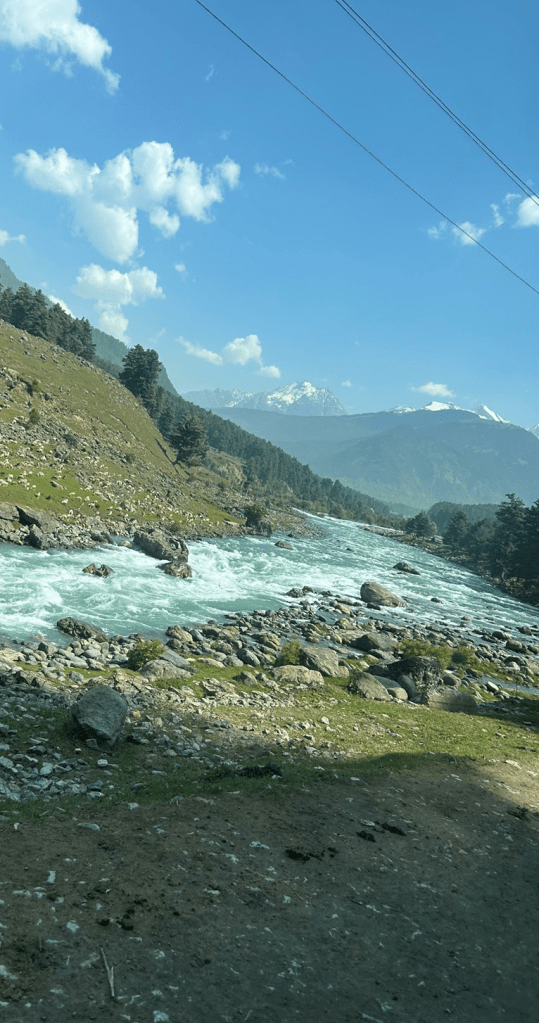

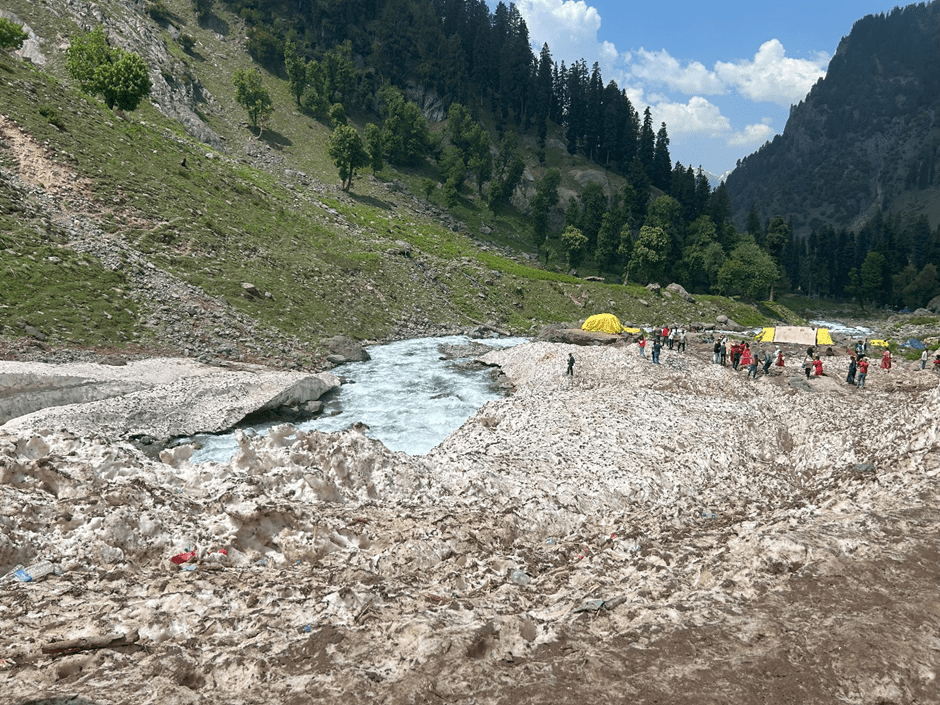
We reached Chandanwadi and walked up to the trail from where the Amarnath Yatra starts. There was busy preparation all around for the annual Yatra as it was just a month away. Chandanwadi had a strip of glacier but it was getting slushy. On the way to the glacier, many hawkers kept accosting us, some with local wares and others with global wares such as wafers and cold drinks, but as usual brisk business along the trail. A few wanted to place a rabbit or a pigeon or a kid (baby goat) on our hands and then pose for photos.
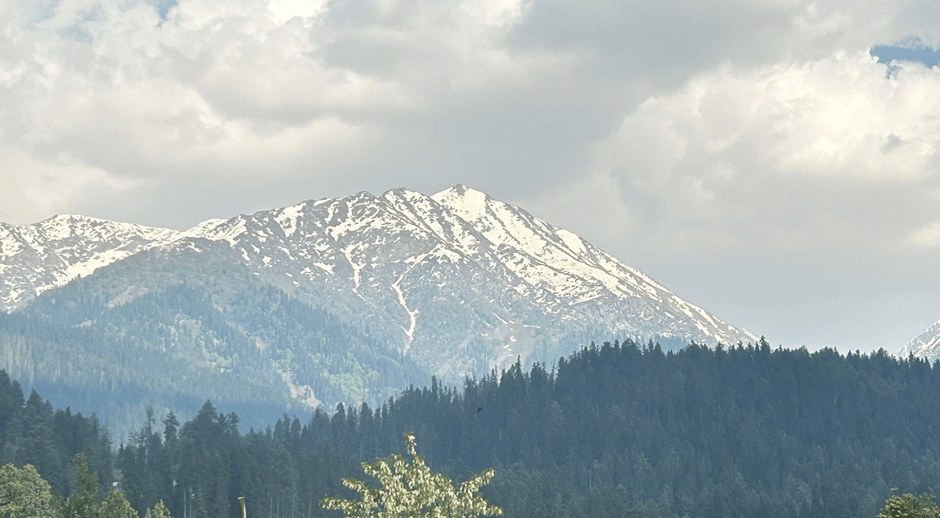
I wasn’t too impressed by Chandanwadi specially due to the crowd and the ice slush but our next stop Betaab valley was mesmerizing. This is where the film Betaab was shot and thus the name, but originally called Harjan valley. Getting plush money, the area was beautifully maintained, with tall fir and pine trees, dotted with several eateries, and the same gurgling river Lidder flowing, but much calmer. Maybe just relaxing in this peaceful surrounding, soaking it in, like we were doing, before its joie de vivre again. I went down to the river where it was very shallow. But one bare foot into the water and my head to toe froze. It was icy cold.
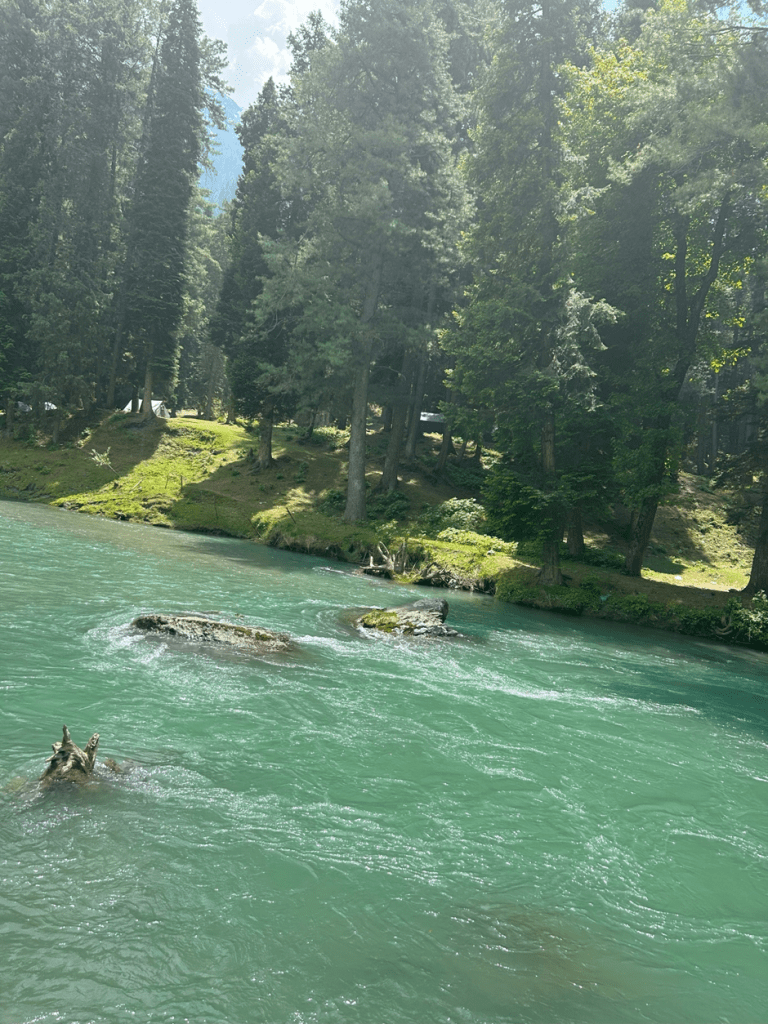
Keeping Lidder river as our company, we crossed Lidder Park and then reached Aru Valley. This had multi tier falls flowing down to meet Lidder river.
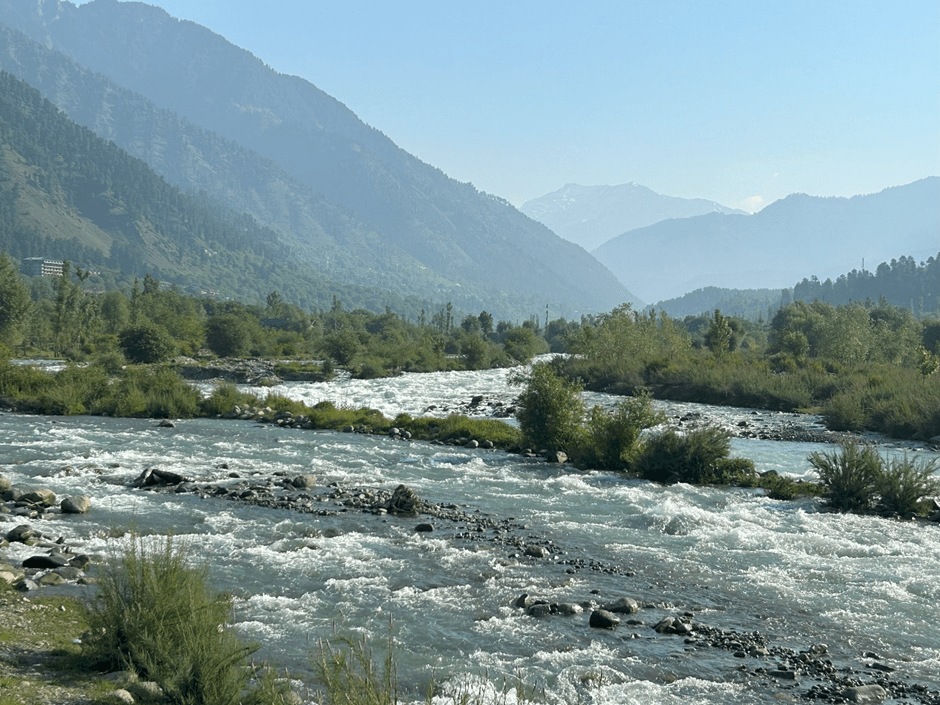
Three valleys, rushing streams of water, picturesque surrounding with flora and fauna brought an end to a very eventful day.
Day 4
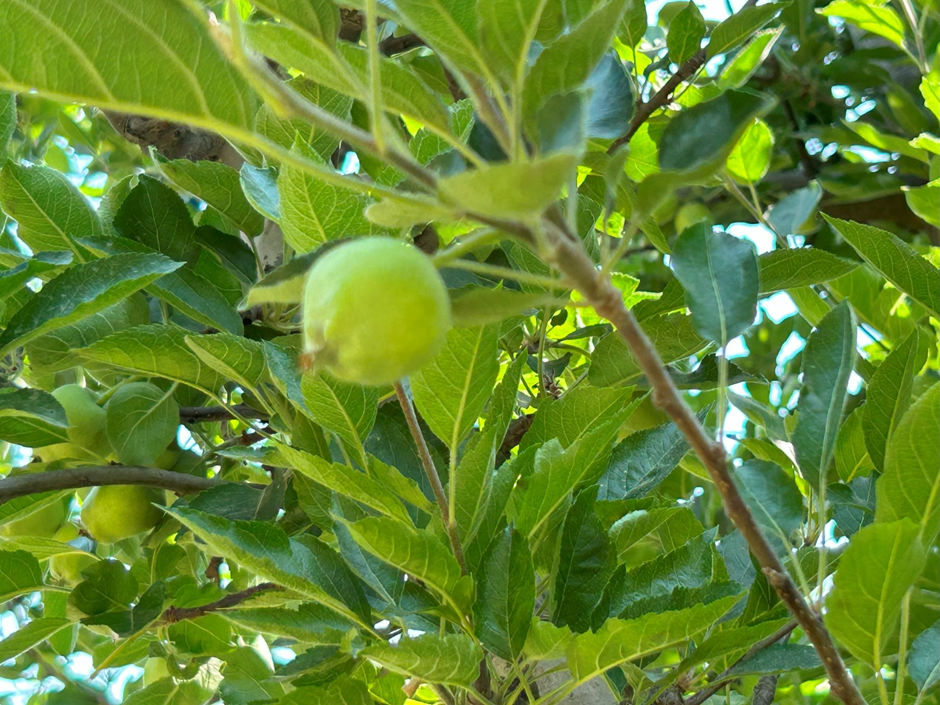
We were heading out from Pahalgam today. We were going back towards Srinagar, where we will halt for lunch and then drive towards Sonmarg. The highway was dotted with apple orchards. We stopped at one and had fresh apple juice, squeezed from a freshly plucked apple. The roadside also had Walnut trees, with green fruit blossoming. There were tall Poplar trees from which pencils and incense sticks are made.
We stopped at a place near Pampore where cricket bats were manufactured from the local willow trees. We visited a factory where each step of manufacturing a cricket bat was demonstrated. It takes one whole year, right from wood selection to carving, chiselling and leaving it out in the rooftop for weathering.
We reached foothills of Sonmarg in the evening and called it a day. I was excited about the visit as there were options of pony rides, taxi rides taking us to the Leh Ladakh border and some dense snow.
The drive up the mountains covered with huge pines and fir tree was breathtaking, but I wasn’t too well to really enjoy it much. I took a taxi back to Srinagar to rest. That is when I discovered the immense hospitality of the local populace right from the hotel staff to the cab driver who took utmost care to ensure that I reached Srinagar and am well taken care of.
Day 5
After a day and night’s rest, I felt much better and didn’t want to miss Gulmarg. Passing Harimukh mountains bordering Tangmarg, we began our journey up towards Gulmarg. Again breathtaking and picturesque surroundings.
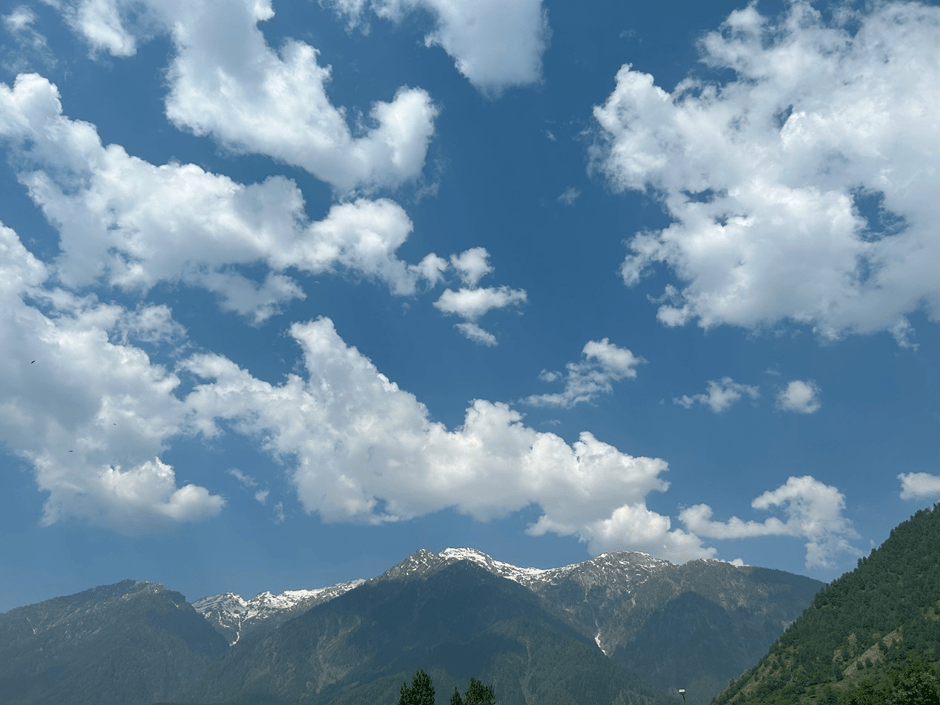
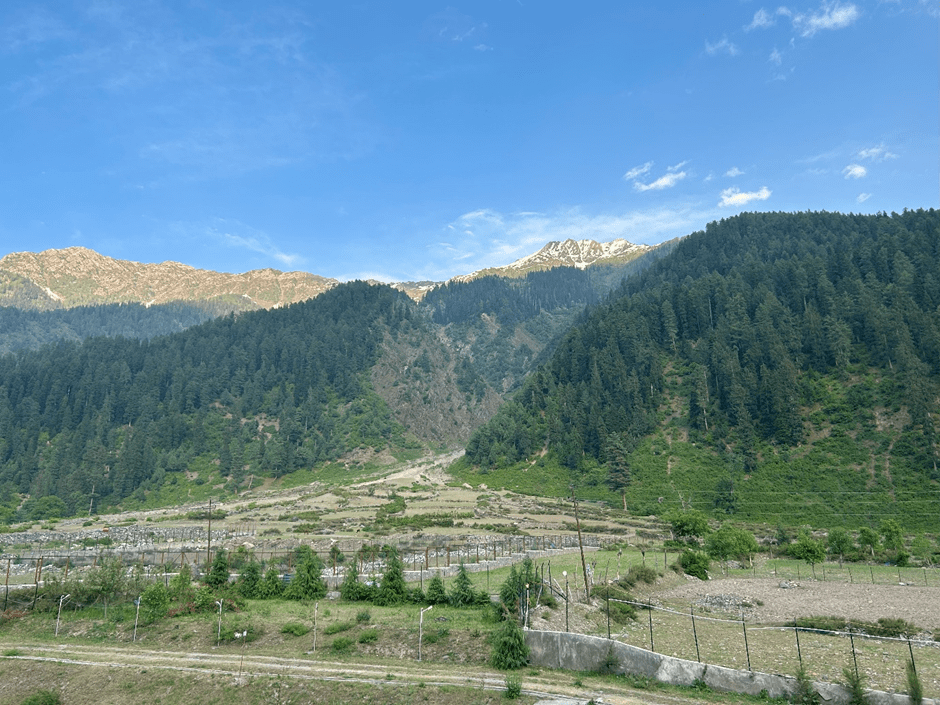
It was cloudy and we seemed to move in and out of the clouds, till we reached an altitude of some 8000 feet. We boarded an ATV which took us to the Gondola station. We boarded a Gondola and slowly started our ascent towards 11kt station. It started raining and soon there were splashes of thunder. Every time the lightning would strike, the gondola would stop.
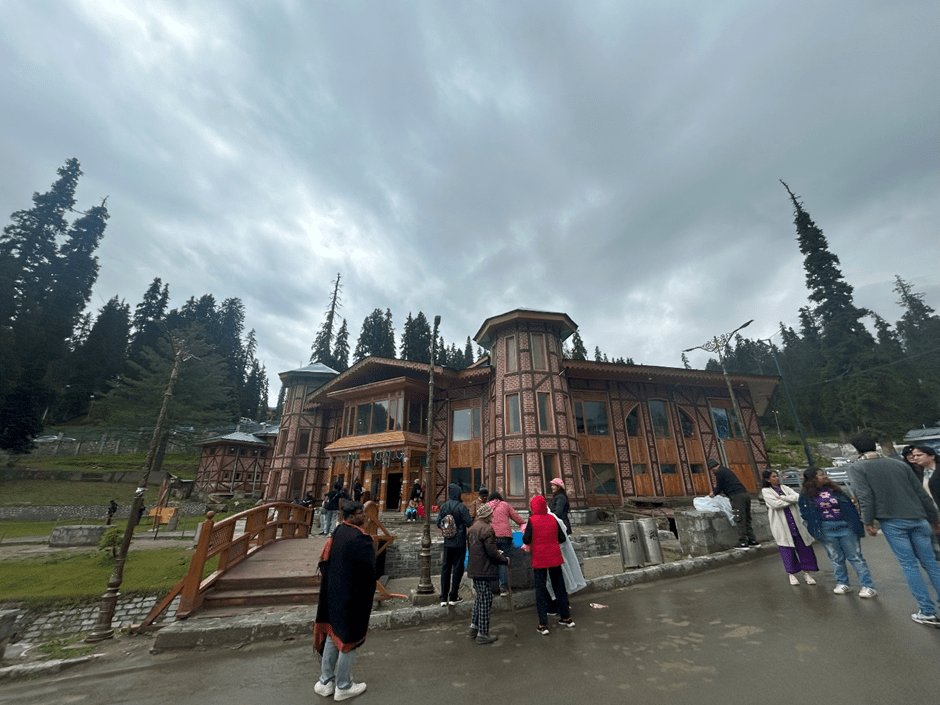
That is scary but eventually reached the top. From there we could see the rolling hills, cloaked in snow and shrouded with clouds.
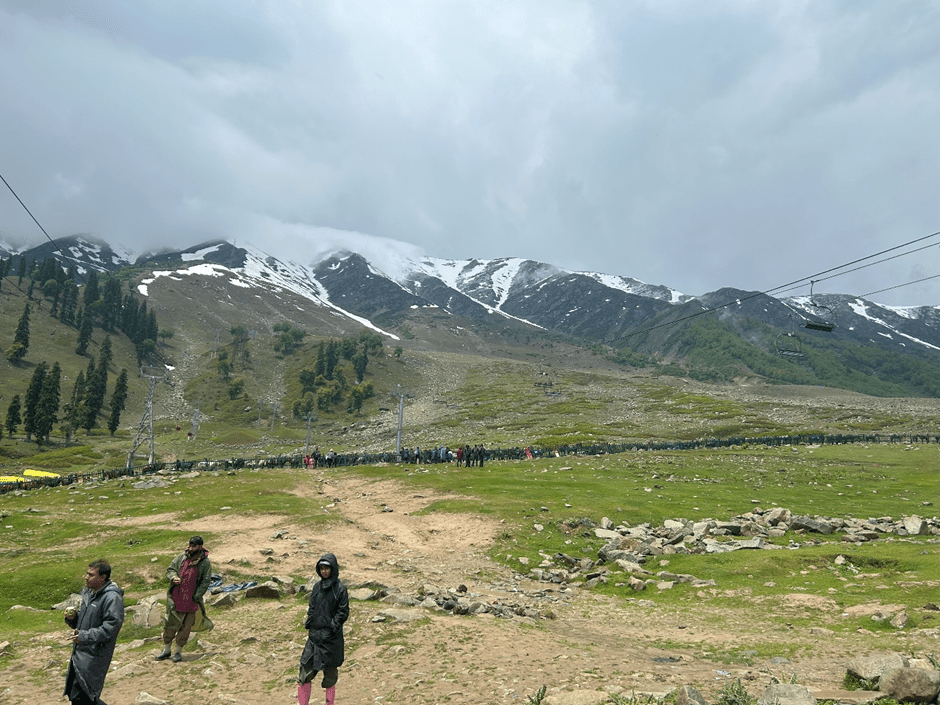
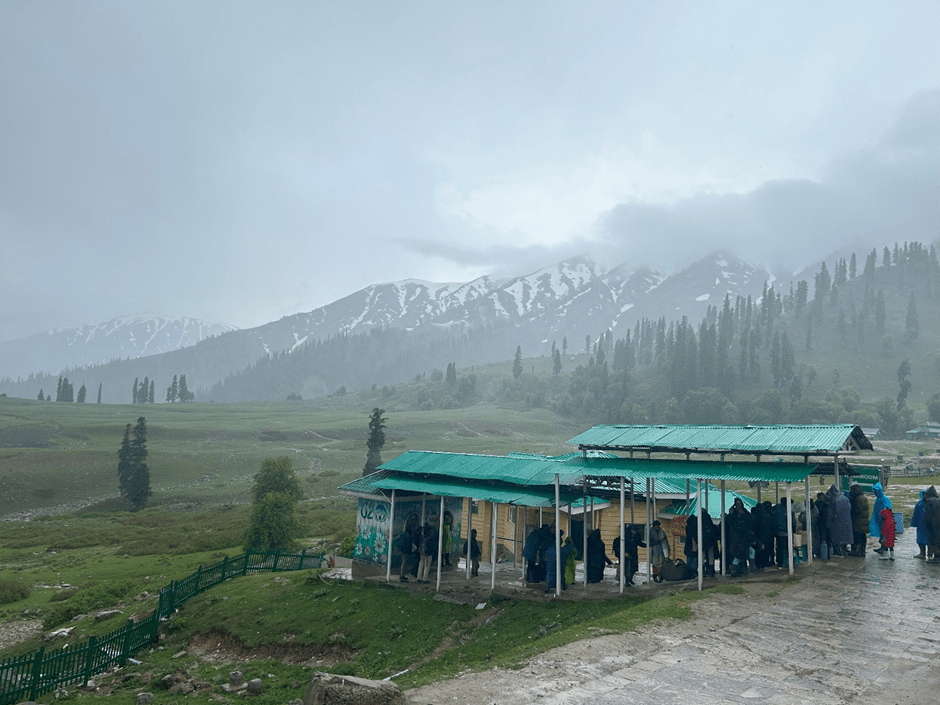
We headed down after having a blast and made our way to a cottage emporium.
It was time to feast our eyes with another Kashmir treat–Carpets. There was a time when every social class boasted of Kashmiri carpets in their living room, as they came in all shapes and price. With less expensive, machine made carpets, the natural handwoven carpets lost its sheen but not where I was sitting now. I was on a comfortable divan where carpets of sheer magnificence were being displayed and like them, my eyes glistened too. The carpets were made from mulberry trees, and as they aged, so did their price and sheen. While expensive carpets was not something I had budget for, I bought some local souvenirs like a woollen kurta, walnut jewellery box and paper mache boxes for keepsakes.
Our journey was coming to an end. The richness of this land, the natural beauty, the fauna and the cultural heritage, the good-natured and welcoming locals were very impressive. Only if the land was peaceful all the year round, we can keep coming back to know more, to see more, and imbibe more.
Day 6
I was up and ready the next day for our return. While getting into Srinagar was easy, getting out certainly is a time taking affair. The airport security is stringent and we had to arrive 3 hours early to comply with the measures. All for our good and resting on the shoulders of the jawans and the locals who tirelessly work to keep the guests safe.
 TheEbbandFlow
lovely!! A bit lengthy though …enjoyed reading every bit 🙂🙂
LikeLike